Rhett & Link on gardening …
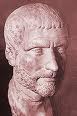
The Roman Emperor Claudius II Gothicus, AD 268-70, is said to have been a large and fierce man. In his efforts to fight the invading Goths and Germans, he attempted to increase the size of the Roman army. Volunteers were few, due largely to what was essentially a life-long commitment of being a Roman soldier. Legend has it that the Emperor believed young men weren’t joining because they were too comfortable and too interested in pursuing women. (Some things never change. My classmates in college often were incredulous that I was volunteering for military service. I was often asked “Why?!”.) With dictatorial efficiency, Claudius solved that problem by simply outlawing marriage.
One problem, legend has it that the Priest Valentinus continued to marry Christians. When called before the Emperor, Valentinus refused to acknowledge the Roman Gods and reportedly witnessed to Claudius the truths of Jesus Christ. Claudius had Valentinus killed.
A few observations from this legend of Valentine, whom we celebrate each year with a festival of love and affection. He was martyred over refusing to surrender the sacrament of marriage to Rome and for proclaiming the truth of Jesus Christ to a pagan emperor. This legendary Valentine sounds more like a man passionate for Christ and the integrity of the church and its sacraments than he does the ruby little cherubs we see on the front of Valentines Day cards who are committed to spreading kisses and romantic mischief.
If we want to celebrate Valentines Day consistent with the man for whom the day is named, we should honor this legendary martyr through observances he would approve and that would be consistent with his life. Foremost, we should take the opportunity to witness the Gospel of Jesus Christ to someone.
Second, we should look for a way to support the sacrament of marriage. For those of us married, that should start with tending to our own marriages. Are we entirely faithful – not just physically, but also emotionally, in our relations, and with our time as well – to our life mate? We should pray over our marriage, with our spouse. For those not married, give an encouraging word to your married friends and pray today for their marriages. Tell them you are praying for them.
Third, recommit today to loving in a manner worthy of our Christian calling — with all that we have and all that we are. We are called not just to love others and God with all that we are, but to love also our enemies and those we just do not like. May Christ so strengthens us.
God bless and Happy Valentines Day.
Update: A Godly Valentines Day Gift from a husband to a wife: commit to praying with your bride – see Spiritual Intimacy a Marriage ‘Game Changer’
Nye issued Ken Ham a post-debate challenge via Facebook. Nye challenged Answers in Genesis to create and live on an ocean bound ark. Ham responded by asking Nye to explain the reason for his reasoning, literally, one of many questions Nye repeatedly ignored during the men’s recent debate. Ken’s FB response yesterday warrants the best Christian-philosophical-apologetic Facebook challenge post ever … reprinted below with permission:

Bill Nye, after our evolution/creation debate last week at the Creation Museum, publicly issued me a challenge yesterday on his Facebook page.He stated :
From Bill Nye The Science Guy: “I would challenge him to build a real ark. Instead of trying to fund an ark park, Ken, why not build a real one and take it to sea for a full year? And Ken, if you’re too busy with your flock there in Petersburg, KY, have your most competent parishioners take a shot. Send 8 of your toughest, smartest people to, say, Norfolk, have them design and build a 500 foot wooden boat, load it up with 17,000 pretty good-sized animals, and show us how straightforward it would be to have it remain seaworthy for a year. They have to gather all the food needed locally before they set sail, of course. It’s one more thought experiment that would illustrate how unbelievable the literal story of Noah is, as translated into modern English. Also, we’d have to stipulate that all humans and animals come ashore alive …”
So I would like to publicly respond to Mr. Nye in the following way.Bill, during the debate last Tuesday, I asked you this question:“How do you account for the laws of logic and laws of nature from a naturalistic worldview that excludes the existence of God?”I challenge you, once again, to provide a rational basis for your worldview. You dodged the question in the debate, and you continue to do so. Until you answer that question, you have no reason to trust your inductions or the uniformity of nature and have no basis to tell us what is right and wrong. I trust those things because I know the God of the universe who created those laws and has promised to uphold them in a uniform way–which is consistent with His perfect character. Indeed, I have a reason for my reasoning.The battle, as I said more than once in our debate, is not about the evidence. (And it seems even a number of Christian naysayers about the debate still don’t get this vital point, either!)
And besides, Bill, you know this, as I even showed you a “single piece of evidence” of an out-of-place fossil (using the secularists’ own dating methods)—45,000-year-old wood in 45-million-year-old rock! You said one piece of evidence like this would change your mind—but you willingly ignored it.
Again, why is your assumption that science is possible apart from God reasonable?
Frankly, you are not a “reasonable man” because no reasonable man who claims to be consistent with reality rejects the truth of God’s Word. In fact, the Bible makes it clear in Romans chapter 1 that you know God exists, but you are suppressing that truth in what the Bible calls unrighteousness.
No “reasonable man” believes that reason, emotion, or morality evolved from the random interaction of chemicals over billions of years. Therefore, you have no foundation. You have a blind faith, one which causes you to borrow from the Christian worldview to even make sense of the world around you.
Bill, I urge you to use your God-given reason to respond to God’s Word, such as:
“Repent therefore and be converted, that your sins may be blotted out, so that times of refreshing may come from the presence of the Lord.” (Acts 3:19)
Bill, Noah’s Ark was a real ship—and it is a picture of a real message of salvation from God’s judgment on man’s sin, including yours. (And the answers to your questions about the seaworthiness of the Ark and how it could have been built are on our website; also AiG is not a church and so we don’t have parishioners.) Just as Noah and his family went through the door of the Ark to be saved, we need to go through the door of our Ark of Salvation.
Jesus Christ said, “I am the door. If anyone enters by Me, he will be saved, and will go in and out and find pasture.” (John 10:9)

Categories
A Lesson in Writing from CS Lewis
The Kilns,
Headington Quarry,
Oxford
26 June 1956Dear Joan–
Thanks for your letter of the 3rd. You describe your Wonderful Night v. well. That is, you describe the place and the people and the night and the feeling of it all, very well — but not the thing itself — the setting but not the jewel. And no wonder! Wordsworth often does just the same. His Prelude (you’re bound to read it about 10 years hence. Don’t try it now, or you’ll only spoil it for later reading) is full of moments in which everything except the thing itself is described. If you become a writer you’ll be trying to describe the thing all your life: and lucky if, out of dozens of books, one or two sentences, just for a moment, come near to getting it across.
…
What really matters is:–
1. Always try to use the language so as to make quite clear what you mean and make sure your sentence couldn’t mean anything else.
2. Always prefer the plain direct word to the long, vague one. Don’t implement promises, but keepthem.
3. Never use abstract nouns when concrete ones will do. If you mean “More people died” don’t say “Mortality rose.”
4. In writing. Don’t use adjectives which merely tell us how you want us to feel about the thing you are describing. I mean, instead of telling us a thing was “terrible,” describe it so that we’ll be terrified. Don’t say it was “delightful”; make us say “delightful” when we’ve read the description. You see, all those words (horrifying, wonderful, hideous, exquisite) are only like saying to your readers, “Please will you do my job for me.”
5. Don’t use words too big for the subject. Don’t say “infinitely” when you mean “very”; otherwise you’ll have no word left when you want to talk about something really infinite.
Thanks for the photos. You and Aslan both look v. well. I hope you’ll like your new home.
With love
yours
C.S. Lewis
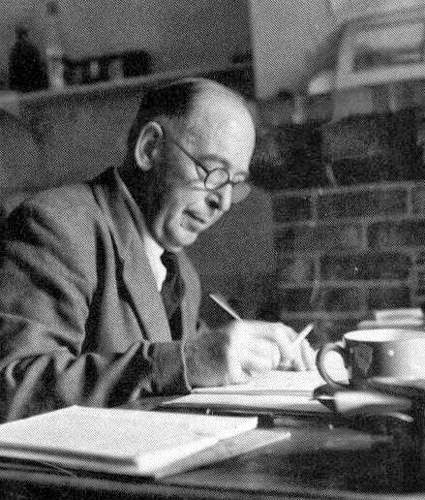
From the collection of C.S. Lewis’ response letters to children: Letters to Children
Hat tip: http://www.lettersofnote.com/
Last night during the debate, I had the privilege of sitting next to Dr. Al Mohler, the Dean of The Southern Baptist Theological Seminary. I’ve long admired his writings, blog, and lecture series. As freezing rain pelted Northern Kentucky last night during the debate, Dr. Mohler’s mind was on fire, as I suspect it always is. As While I sat back to observe and enjoy the debate, Dr. Mohler wrote furiously throughout the evening. Sometime in the wee hours of the morning, he posted an excellent debate analysis. Excerpts follow and I strongly encourage you to read the entire post at Dr. Mohler’s blog:
In this light, the debate proved both sides right on one central point: If you agreed with Bill Nye you would agree with his reading of the evidence. The same was equally true for those who entered the room agreeing with Ken Ham; they would agree with his interpretation of the evidence.
That’s because the argument was never really about ice rods and sediment layers. It was about the most basic of all intellectual presuppositions: How do we know anything at all? On what basis do we grant intellectual authority? Is the universe self-contained and self-explanatory? Is there a Creator, and can we know him?
On those questions, Ham and Nye were separated by infinite intellectual space. They shared the stage, but they do not live in the same intellectual world. Nye is truly committed to a materialistic and naturalistic worldview. Ham is an evangelical Christian committed to the authority of the Bible. The clash of ultimate worldview questions was vividly displayed for all to see.
….Ken Ham is a Young Earth Creationist (as am I), but the larger argument was over worldviews, and the debate revealed the direct collision between evolution and the recognition of any historical authority within Genesis 1-11. As if to make that clear, in making one of his closing arguments, Bill Nye actually went back to cite “this problem of the ark.”
The ark is not the real problem; autonomous human reason is. Bill Nye is a true believer in human reason and the ability of modern science to deliver us. Humanity is just “one germ away” from extinction, he said. But science provides him with the joy of discovery and understanding.
…The central issue last night was really not the age of the earth or the claims of modern science. The question was not really about the ark or sediment layers or fossils. It was about the central worldview clash of our times, and of any time: the clash between the worldview of the self-declared “reasonable man” and the worldview of the sinner saved by grace.
See entire post here.
I generally agree with Rev Travis’s comments about the debate, below. Some thoughts after having just returned from the debate in person … I found striking the complete difference between the men – not just content, but also in character and style. In person, I found Nye routinely condescending and arrogant to Mr. Ham, while Ken seemed continually meek and humble in response. I wonder if this viewed the same on the live streaming.
Nye refused to concede that there was any difference between historical and observational science. He seemed to argue that we presently observe the age of the earth, apparently through radioisotope dating, but he had no response to the wildly inconsistent age readings from such methods. He offered no explanation regarding the problems with the assumptions upon which these methods rely. He looked surprised when Ken showed the nearly hundred different type isotope dating methods and the fact each on produces quite different results.
From the audience, it seemed that Nye repeatedly and directly assaulted on reliability of scripture in the second half of the debate. In criticizing Ken’s positions, Nye criticized Ken’s reliance upon the Bible by implying the Bible is unreliable based on the “Chinese whispers” logic of passing along information over long period of time and made numerous critical remarks about relying upon “an ancient document that’s been translated into English.” Nye scoffed at the idea that sin affected all of creation and was all but contemptuous of the global flood.
Favorite part of the debate was when Nye could not answer where the matter that led to the Big Bang came from. In response, Ken responded “Bill, there is this book that has the answer …” Ken then quoted Genesis 1:1 and explained the Biblical account on the origins of matter. The next question to Nye was what was the materialist explanation for consciousness. Again, Nye could not answer. Again, Ken responded, “Bill, there is this book that has the answer …” and he quoted and explained Genesis 2.
Nye’s explanation of consciousness was bizarre, something about our conscious being “the universe looking at itself.” Weird. In the last quarter of the debate it became increasing apparent that Nye all but worships materialism.
I wish Ken had more time to explicate the “scientific” evidence of a young Earth. See Ten Best Evidences from Science of a Young Earth. Unfortunately, there was not enough time to respond to many of Nye’s points. I believe Answers in Genesis is doing a follow-up streaming broadcast to go over many of these points.
As expected, I don’t think either side “won.” Each side presented their position with clarity. For those already familiar with the arguments and issues, there was not anything new. For those new to the debate or previously apathetic, it should have provided plenty of food for thought from both sides. It was a general civil and engaging evening. As stated, Ken explained the creationist perspective with humility and grace. It will be interesting to see how this plays out. I’m particularly interested to see whether or to what extent notice is given to Nye’s assault on the Bible and on basic biblical doctrines beyond creation.
UPDATE: see Debunking Bill Nye’s Arguments
Do you see a man wise in his own eyes?
There is more hope for a fool than for him. Proverbs 26:12
Nothing in all creation is hidden from God’s sight. Everything is uncovered and laid bare before the eyes of him to whom we must give account. Hebrews 4:13
“What are you going to believe, science or your lying eyes?”
That fairly summarizes how I felt about evolution and naturalist explanations on the origins of the universe and life, before I became a Christian at the age of 29. I knew I didn’t want there to be a God of morality and judgment, but I also knew what I saw all around me: incredible complexity and order from the subatomic all the way through to the galactic level. Our bodies testify to the same – incredible and massively interdependent complexities working together to form what I take for granted as simply “myself.” It seemed equally arrogant, naïve and foolish to think that humanity was at the pinnacle of life, that what we could measure with our little instruments captured all of reality, that our space-time continuum was “it.”
I also wanted nothing to do with Jesus Christ. I did not know and thus certainly did not understand the Gospel, but I knew that I did not want to be answerable for how I chose to live. I was wed to my pagan ways. If I had to pick a religion, Zen Buddhism suited me just fine only because of its literal irrationality.
In my life, God has a way of quietly catching me off guard and then turning my life upside down. Ultimately for my better. One such instance was
Then I heard the voice of the Lord saying, “Whom shall I send? And who will go for us?” And I said, “Here am I. Send me!” Isaiah 6:8
 On the side of the church parking lot before a soccer game, Thea Lewis told me they will “rock your world” and implied we would never be the same again. Sounded like a threat to me. No. Thea assured that we would find ourselves most blessed. I wasn’t entirely confident. Thea and her large family have adopted multiples from overseas and are in the process of adopting another. She’s invested in the adoption community. She told me gritty, hard stories about the difficulties and pain of adoption. Her stories reflected what we heard from others that traveled down the adoption path: struggle, joy, pain, healing, brokeness, happiness, despair, lies, praise … drawing closer to the Lord. We had committed to host six orphans from Eastern Europe over the holidays and I was scared.
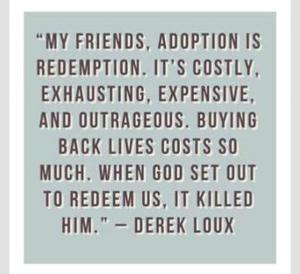
Our oldest child of four, our 13-year-old daughter, kept asking us when we were going to stop talking about possibly maybe someday adopting or fostering or possibly doing something like that. It’s time to stop talking and start doing she insisted. She gained access to the children “available” for hosting pages on the Open Hearts and Hands (“OHHC”) and New Horizons web pages and began emailing us pictures of available children from Eastern Europe looking for their “forever family.” Soon, our other three children joined the search. They happily offered that our hosting children for a month over the holidays would be their Christmas presents.
So we started reading the pages. Not surprisingly, it was heartbreaking surfing pages of pictures of orphans. Each picture carried a short caption giving insight into these children. Many expressed their desires for hosting – swim in a pool, learn how to pray and ride a roller-coaster were recurring themes. My wife and I quickly began setting our rules and expectations:
Tommy Burleson shared his testimony during the intermission of my son’s  Upwards Basketball game this morning. Mr. Burleson played starting center for the 1974 North Carolina State NCAA Championship team. He was the MVP of the 1973 and 1974 ACC Tournaments and was All-Final Four in 1974. He also played on the US Olympic basketball team and played eight years in the NBA. He now lives down the road from Raleigh in New Bern, NC.
Mr. Burleson mentioned that at age 14, he was already 6’8″. Now, at 7’2′ tall, he’s large. I’m 6’5″ and felt small next to him. Not a feeling I’ve had much since childhood.
In his testimony, Mr. Burleson shared the importance of building foundations in life. He stressed that Jesus Christ was the foundation for his life. He spoke of the importance of taking care of the fundamentals, like praying and reading the Bible each day. He founded and operates the Tommy Burleson Christian Evangelistic Ministry, which supports a medical mission in tiny Malawi, Africa and through which Mr. Burleson operates outreach basketball camps.

Mr. Burleson also mentioned the impact of his father, a former Army Green beret. As a former Airborne Ranger with sports active kids, I was interested in his father. Mr. Burleson explained to me that his father was in the elite advance troops that glided into Normandy on D-Day and he served in the Green Berets and on President Truman’s honor guard. His father would wake his son up every morning at 5:30 a.m. so they would work out together, running anywhere from one to three miles each morning. Sounds like a good idea.
Mr. Burleson was also enthusiastic for the testimony of another former NCSU athlete – Russel Wilson and recommended the following video he and some of his teammates made on the Making of a Champion:
Almost makes me want to cheer for the Seahawks. Almost, but note quite.
The recent holidays several times brought me to my knees, reminding me of the power and importance of prayer in our daily walk, both my own prayer and the prayers of God’s people. I also learned to put an emphasis on the word “daily” for my walk with God, a point I had known but not really learned before. More on that and the past several weeks later, Deo volente. My coming back to the sweet and utter grace of God in His receiving our prayers reminded me of a recent sermon excerpt from my pastor Stephen Davey, which follows for your edification:
J. Sidlow Baxter was a pastor in the early 1900’s. A prolific writer, powerful expositor, Baxter graduated from Spurgeon’s Pastor’s College in London and went on to be used greatly in his generation, on both sides of the pond. His life literally spanned the 20th century – from 1903 to 1999.
He struggle with prayer as a pastor. He let his schedule get in the way of private communion. One morning he took a good look into his heart, and found there was a part of him that did not want to pray and a part that did. The part that did not was his emotions; the part which did was his intellect and will. He writes – and I quote, a rather lengthy page, but we’re finished when I’m through and I believe you will be equally inspired and challenged by this – As never before, my will and I stood face to face. I asked my will a straight question, “Will, are you ready for an hour of prayer?” Will answered, “Here I am, and I’m quite ready, if you are.” So Will and I linked arms and turned to go for our time of prayer. At once all the emotions began pulling the other way and protesting, “We are not coming.” I saw Will stagger just a bit, so I asked, “Can you stick it out, Will?” and Will replied, “Yes, if you can.”
So Will went, and we got down to prayer, dragging those wriggling, unruly emotions with us. It was a struggle all the way through. At one point, when Will and I were in the middle of an earnest intercession, I suddenly found one of those traitorous emotions had snared my imagination and had run off to the golf course; and it was all that I could do to drag the wicked rascal back. A bit later I found another of the emotions had sneaked away with some off-guarded thoughts and there I was in the pulpit, two days ahead of schedule, preaching a sermon I had not yet finished.
At the end of that hour, if you had asked me, “Have you had a good time?” I would have had to reply, “No, it has been a wearying wrestle with contrary emotions and a truant imagination from beginning to end.” What is more, that battle with the emotions continued for weeks. If you had asked me at the end of that period, “Have you had a good time in your daily praying?” I would have had to confess, “No, at times it has seemed as though the heavens were brass, and God too distant to hear, and the Lord Jesus strangely aloof, and prayer accomplished nothing.”
Yet something was happening. For one thing, Will and I were teaching emotions that we were independent of them. In fact, one morning, just when Will and I were going for another time of prayer, I overheard one of the emotions whisper to the other, “Come on, you guys, it is no use wasting any more time resisting; they’ll go just the same.” That morning, for the first time, even though the emotions were completely uncooperative, they were at least quiet, which allowed Will and me to get on with prayer without distraction.
Then another few weeks later, what do you think happened? During one of our prayer times, when Will and I were no more thinking of emotions than of the man in the moon, one of the most vigorous of the emotions unexpectedly sprang up and shouted, “Hallelujah!” at which all the other emotions exclaimed, “Amen!” And for the first time, the whole of my being, intellect, will and emotion –was united in the coordinated operation of prayer.
This is not only our directive . . . this is to be our delight.
DECEMBER 6, 2013: ST. NICHOLAS DAY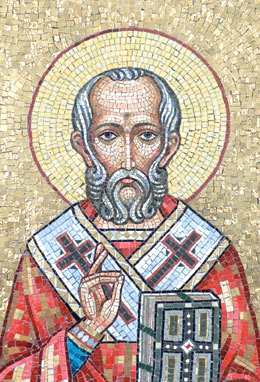
by Dima Kotik
Raising three daughters in 3rd century Turkey is hard for a peasant. Without a dowry they could never get married. The joy of having grandchildren and finding financial security of a large family in the old age is all but a dream for a simple farmer caught in this despair.
One winter night, the father of three girls woke up to the noise of something falling through the chimney. In the pile of ashes he found three purses filled with gold. The gold in each purse handsomely provided dowry for each daughter. There was only one crazy man in the town of Myra who would do such a thing. This man, even though he came from a very wealthy family, had given away his entire inheritance to the poor. And even though he was a bishop now, he did not keep any of his salary. Most of it he gave away to children.
Bishop Nicholas of Myra is the real historic person behind our legends of Santa. Unlike Santa, he was an expert in theology and pastoral ministry. He was one of the top 300 church leaders that signed the Nicene Creed in 325AD. And, he was a convicted felon for preaching the gospel, serving a prison term under Emperor Diocletian and a brief exile. Real Santa was hardcore for Jesus!
Happy St. Nicholas Day!
Categories
It’s all about Jesus Christ
It was a gray afternoon in late April 1997, my brother Travis and I were on I-77 North, heading to our Opa’s funeral. I was a few weeks away from graduating lawschool and a few years into an apologetics struggle that had led me to believe the Bible was true and Jesus Christ was the Son of God. With that head knowledge, that made me a Christian. Or, so I thought. My brother had since been saved.
As twenty-something year old brothers of German descent, we liked to argue about everything then. Everything. That ride was no exception. For hours, we argued, discussed and debated the truths of Christianity, particularly the doctrines of predestination. Over time, we often changed sides in debates. I suspect during that ride that Travis was arguing in favor of 5 point reformed predestination. At one point, he turned to me and said, “But Tony, the wages of sin is death, but the gift of God is eternal life through Christ Jesus his son.”
During the midst of his quoting Romans 6:23, my eyes opened for the first time. I saw that my salvation was entirely by, for and about Jesus Christ. It was all about him and what he had done. It had nothing to do with me. God’s glory is ultimate, supreme and eternal. That glory manifested itself in what Christ has done. It is only and entirely by his grace that we are saved, indeed, that we even exist. At that moment, God showed himself to me and saved me from my sins. My life has never been the same. That was the birth of the new me. Over the years, that knowledge and experience about the glory of God has deepened as I’ve come to know Christ more and rely upon him more instead of himself.
In my journey, my family and I have been blessed by the fellowship of Colonial Baptist Church and learning under the teaching of our senior pastor, Stephen Davey. He reminds us regularly about the centrality of Christ and his word. (His sermons are excellent and can be heard through his Wisdom for the Heart ministry (check out the online sermons section) and his teaching is broadcast worldwide by the Bible Broadcasting Network. Recently, in the midst of a sermon, he reminded us that even Scripture is all about Jesus Christ. Indeed, every book is about Christ. Stephen explained, as follows:
Let the Old Testament Record Speak!
by Pastor Stephen Davey
Listen to the record of God’s testimony in the Old Testament – listen to it speak! In
Genesis Jesus Christ is the creating voice of the triune God according to the confirmation of the Apostle Paul in Colossians 1. It was Jesus, God the Son, who spoke the worlds into existence. Furthermore, in Genesis, Jesus Christ is the prophesied seed who will crush the serpent’s head;
In Exodus Jesus Christ is the Passover lamb whose blood protects His people from the wrath of God; He is the manna from heaven and the water gushing from the rock;
In Leviticus He is the tabernacle of God among men:
- He is the brazen alter – signifying his death which gives entrance;
- He is the brazen laver – promising to cleanse us from every sin;
- He is the bread – signifying food that satisfied;
- He is the golden lamp stand – the light of the world that will never be extinguished;
- He is the altar of incense – ascending and perpetually interceding on our behalf
- He is the veil – through Whom is our access into the Holy presence of God;
- And He is the holy of Holies – for in Him God the Father communes with His people and His people commune with heaven.
In the Book of Numbers, He is the Great High Priest who will never fail;
In Deuteronomy, He is the city of refuge where criminals may run for protection;
In Joshua, He is the champion over every obstacle; strength over ever enemy that stands in the way of His people;
In Judges, Jesus Christ is the angel of God, empowering the weak and pursuing the wandering; He is the perfection of patience toward His wandering people;
In Ruth, He is the wealthy Redeemer who buys His bride out of hopeless poverty; placing her in the family line of royalty, giving her the right to everything that belongs to Him;
In First and Second Samuel, He is the Name of the Lord, in whose strength people of faith dare to conquer enemies and slay giants;
In Kings and Chronicles, Christ is the sovereign King behind and above all kingdoms both pagan and God-fearing;
In Ezra, He is the keeper of Divine promises to Israel and the Hand that liberates His people from bondage;In Nehemiah, He is the re-builder of broken lives and broken hearts and broken dreams; He is the restorer of broken fellowship between God and man;
In Esther, He is behind the scenes, outwitting the Evil One; faithfully protecting His unfaithful people, whispering into the ear of a young queen that for such a time as this, she has been crowned.
In Job, He is the majestic One who rides upon the wind and commands the lightning and the storm; the Lord of mystery who does not explain life, but reveals He is sovereign over all of life;
In the Psalms, He is the Rock of refuge, the Shepherd of the sheep, the Tower of shelter, the Honeycomb of divine revelation;
In Proverbs, He is everlasting Wisdom; Divine counsel for those who accept His invitation to turn aside and listen;
In Ecclesiastes, He is eternal satisfaction over every earthly desire; the One to be remembered in the days our your youth;
Ray Comfort interviews the man on the street, the trusting students and the revered “experts” on evolutionary dogma. Their own words again betray the profoundly faith based nature of evolutionary theory …
This is much more satisfying and inspirational than reading about the Zimmerman-Martin case or the most recent Roberts Court jurisprudential disaster:
I recently heard Rosario Butterfield refer to her Bible study time as sitting and learning at the feet of Jesus, and Moses, and Paul, and Isaiah and the other prophets and apostles. What an elegant but impacting way to think of it. To what lengths would I go to listen to Jesus or Moses in person? Shouldn’t I simply walk across the room then and pick up my Bible hear what God had them write to me?
Here, a number of Chinese believers receive their first Bibles:
“For I am not ashamed of the gospel, because it is the power of God that brings salvation to everyone who believes” Romans 1:16
“But in your hearts revere Christ as Lord. Always be prepared to give an answer to everyone who asks you to give the reason for the hope that you have. But do this with gentleness and respect“ 1 Peter 3:15
An Intellectual Masterpiece on the Modern Worldview
Some things in life are really good. Like my wife’s lasagna. A hug from your child. Sunrises and sunsets. Fresh coffee. Good art. The finish line of a hard race.
A good book ranks as one of the better things in life. A good book opens the mind to new perspectives or ideas. It takes you away, lifts you to new places and/or brings you down to places you hadn’t experienced. Good books deliver pure mental pleasure. In Total Truth: Liberating Christianity from its Cultural Captivity, Nancy Pearcey has written such a book. A totally good book.
Well, a nearly totally good read. The book was a wonderful surprise, to include that I now have a favorite non-fiction book with which I have significant disagreement. Ms. Pearcey’s book is so well written, however, that its strength compensates for and overshadows the areas of weakness with which I disagree. More on that shortly.
Several months ago, I wrote a blog piece about truth – Truly, there is a God who will be known. In it I pondered how inconsequential and incompatible the concept of truth should be in the secular humanist worldview, yet how aggressive militant atheists argue regarding the truth of origins and destiny. In contrast, truth is a foundation concept for Biblical Christianity, and the belief in truth is hard-wired into who and what we are, itself an apologetic for the truth of Scripture. I didn’t think it was a controversial proposition, so I was a bit surprised when a few atheists became apoplectic at what I said. Interestingly, while they attacked ancillary points with fervor, they never confronted the central issue presented – in a world without God, what is truth and why should we care?
The topic brought me to a book that some colleagues mentioned in passing over the years: Nancy Pearcey’s Total Truth. Once I picked it up, I did not want to put it down again until I had finished. A real gem that in this reader’s experience starts well and gets better with every page turn.
God blessed Ms. Pearcey with a tremendous mind and wonderful writing skills. Her insights and logic are reminiscent of her mentor Francis Schaeffer, and her style reminds me of C.S. Lewis. Like Professor Lewis, it requires very little effort to read Ms. Pearcey and she has a wonderful efficiency with words. Her reasoning is clear, concise and to the point, which is essential given the scope and magnitude of thought in this volume. Total Truth is a remarkable intellectual accomplishment.
Ms. Pearcey divides her book into four parts. In Part One, which she titles “What’s In A Worldview?”, Ms. Pearcey explains the centrality of worldview to how we live. I’ve read and attended innumerable articles, books, lectures, and sermons on “worldview.” Frankly, after so many iterations, I rarely find something new or interesting. Accordingly, I tend to shy away from works presented as worldview lectures. But this book is different. Ms. Pearcey transitions effortlessly from contemporary and personal anecdotes and experiences to explaining the historical and philosophical origins of the secular-sacred divide in Western thought, what she calls the “Modern Schism.” One of the more prominent consequences of this schism in our beliefs is that most believers remain blissfully unaware and undisturbed that by and large we do not form and live a Christian philosophy of business, politics or culture. While expressing personal conversion to faith in Jesus Christ, we live largely the same as our secular humanist counterparts, having compartmentalized secular versus “sacred” value systems.
This Modern Schism did not start in the 1960s. Ms. Pearcey takes the reader from the ancient Greeks to today to explain the dichotomy of Western thinking and why “Christianity no longer functions as a lens to interpret the whole of reality[and why] it is no longer held has total truth.” Ms. Pearcey explains, “We have to insist on presenting Christianity as a comprehensive, unified worldview that addresses all of life and reality. It is not just religious truth but total truth.”
After diagnosing the symptoms of our age and how we arrived in this condition, Ms. Pearcey draws the battle line in Part Two of her book. She identifies the battle over origins as the key and foundational intellectual battle of our time; she titles this section of the book “Starting at the Beginning.” I could not agree more with her prescription, however, as noted below, she advocates that we should all join the battle over Intelligent Design, a tactical mandate with which I do not agree, per below. Over several chapters, Ms. Pearcey lucidly explains how philosophical materialism permeates our thinking and culture, as a “universal acid.” She marches straight through the meaning, purpose, frauds and faith of Darwinian dogma and sets out compelling rebuttal evidence and arguments from Intelligent Design. She concludes Part Two with the chapter “Today Biology, Tomorrow the World” in which she sets forth the universal ambitions of Darwinian philosophy — how it seeks and is largely succeeding in its efforts to present itself as the total solution for all areas of human thought and endeavor, albeit a false solution.
In Part 3, “How We Lost Our Minds,” Ms. Pearcey traces the origins and history of evangelicalism and points out consistent trends and patterns therein, particularly those that left evangelicals so vulnerable to philosophical naturalism. I found this section fascinating, having never studied it before. The patterns illuminated many issues I’ve seen and experienced in churches and within ministries. As part of her review, Ms. Pearcey takes issues with evangelical’s somewhat anti-historical and positivist view of biblical interpretation, with particular criticism for Lord Bacon’s Biblical hermeneutics. She explains how empirical theology stems from Enlightenment thinking. She also reiterates C.S. Lewis’ admonition to read the old books, creeds and confessions.
Ms. Pearcey then ties in the history of evangelicalism and the Modern Schism. She quotes Richard Hofstadter’s observation that to a large extent “the churches withdrew from intellectual encounters with the secular world, gave up the idea that religion is a part of the whole life of intellectual experiences, and often abandoned the field of rational studies on the assumption that they were the natural province of science alone.”
The last chapter in Part Two, “How Women Started the Culture War,” is a distinct, insightful and quite educating analysis of changing female roles during the Industrial Revolution, the Second Great Awakening, and on through to the early 20th Century and how these changes affected families.
In Part 4 “What Next? Living It Out”, the most spiritual portion of the book, Ms. Pearcey reviews the importance of making sure our actions comport with a Biblical as opposed to a secular worldview. She takes issue with Christians living their lives and conducting their affairs utilizing worldly methods through the flesh instead of relying upon the ways of God. I heard distant echoes of Watchman Nee’s The Normal Christian Life in this section. She concludes this section in a similar vein, taking issue with Christian ministries conducting themselves as secular enterprises.
In total, Total Truth ranks as one of the best non-fiction books I’ve read, and an excellent world view assessment. It could become a classic. There were however, three points with which I disagreed with Ms. Pearcey and which I believe are worth sharing.

“College” may be transforming now as quickly as Apple transformed how we buy and listen to music last decade …
While Ivy League “students” learn how to perfect their perversions with porn stars, UNC Tar Hell students spend NC tax dollars on orgasm clinics, and Big 10 Professors feature after-class/in-class live sex shows, the “fix” may already be in the works. Dazzled by big collegiate names, sterling sports reputations and a host of beneficial science and engineering research, too many are oblivious to or apathetic about the morally decrepit and intellectually flaccid state of most humanities departments within our universities.
We may not need to reform those departments, they may simply go away for being obsolete. Why pay tens of thousands of dollars in (often tax subsidized) tuition and room and board for what can be obtained for free. Or so we can hope. Like so many problems that plagued humanity for ages, technological innovation may pave for real change — near universal accessibility for little to no cost, international exposure to content, and the power of social media/leveraging to filter and elevate quality content. The following video explains not just how this might happen, but how it is presently turning into reality:
Categories
Equipping God’s People
Psalm 19:7-9
The law of the Lord is perfect,
refreshing the soul.
The statutes of the Lord are trustworthy,
making wise the simple.
The precepts of the Lord are right,
giving joy to the heart.
The commands of the Lord are radiant,
giving light to the eyes.
The fear of the Lord is pure,
enduring forever.
The decrees of the Lord are firm,
and all of them are righteous.
We restarted a family integrated Bible study at our church recently, which is fancy speak for a Bible study where everyone is invited – newborns to grandparents.

The class is committed to equipping and encouraging our families to study the Bible together. We use the Answers Bible Curriculum (“ABC” for short) published by Answers in Genesis. ABC is a comprehensive curriculum designed to cover the entire Bible. AiG explains:
Synchronized Sunday school for all ages!
Answers Bible Curriculum is a full-featured, chronological, 3-year Sunday school program. Its 156 lessons are synchronized across 7 age groups from preschool to adults. Each group covers Genesis through Revelation and learns the same material—but at different levels of depth—empowering exciting and easy discussion for the entire family.
The curriculum teaches both what the Bible says and also why we can believe it’s true and how to read it. In the first few lessons, the family is taught the meaning of inductive Bible studies, the foundational nature of scripture, how to distinguish between exegesis and eisegesis, and fundamental apologetics regarding the truth of scripture. Great content and all scripture based.
The curriculum is designed for churches, ie student guides, teaching materials and devotionals are organized by age. AiG is working on but has not yet released a family integrated curriculum; they have, however, released a family weekly devotional that tracks the lessons. For our class sessions, our leader Andy Wilson reviews the various age group lessons and merges them into a single class designed for all ages.
Perhaps most importantly, it has helped us improve our biblical discipleship within our family. We engage the same issues together as a family and have detailed study guides to reference and guide us in the Word. It has already become much easier for my wife and I to disciple our children on important issues of our Christian faith. Praise God!
 Sapphire Sky