Categories
culture

Time to Choose!

There are a lot of competing voices in our culture concerning the gay marriage issue. Who you listen to will make all the difference on how you decide where you stand.

People in positions of influence will make statements like, “My moral code is a matter of faith,” or “I don’t have the right to impose my moral code on you,” or “You can’t legislate morality,” or “I am not always right, and neither are you.” Comments such as these appear to have a form of wisdom.

Let’s briefly consider the above ideas. First, morality is not a matter of personal preference. The source of all morality is God. True morality, the type that leads away from sin, is a reflection of God’s holy character. He, in fact, demands that we obey his moral code as revealed in His law. God’s law is not something that is given to us as a suggestion. It’s not a preference. He revealed it to the world and commands that all must obey it; and He reveals that it is this law under which all will be judged.

Second, when understood correctly, law is morality legislated. That’s the whole point. If you support something legally, you support it morally. Throughout the history of our country we have legislated morality. The foundation of law in the West has been the Bible. The Magna Carta was the first piece of legislation that recognized that all people, the king included, were under the authority of God’s law. The term “the rule of law” enshrines this idea. In making laws, people have attempted to make morality normative for the people of that society. So, yes, you can legislate morality; and in making specific laws that seek to encourage people to obey that moral code you are, in fact, imposing a moral code on others.

Third, it is true to say that “I am not always right, and neither are you.” And while people are fallible and will certainly get things wrong from time to time, the Bible is infallible and is not wrong. So, while I may not always be right, we can rest assured that the Bible is always right. In fact, communicating this very truth the Bible warns that, “There is a way that seems right to a man, but its end is the way of death” (Proverbs 14:12). As a result the Bible encourages us to, “Trust in the LORD with all your heart, and lean not on your own understanding; in all your ways acknowledge Him, and He shall direct your paths. Do not be wise in your own eyes; fear the LORD and depart from evil” (Proverbs 3:5-7).

When one applies these realities to the current issue of gay marriage, a seemingly complicated issue becomes very clear. The Bible warns that all sin is an offense against a Holy God. Concerning certain sins the Bible clearly teaches, “Do you not know that the unrighteous will not inherit the kingdom of God? Do not be deceived. Neither fornicators, nor idolaters, nor adulterers, nor homosexuals, nor sodomites, nor thieves, nor covetous, nor drunkards, nor revilers, nor extortioners will inherit the kingdom of God” (1 Corinthians 6:9-10). Notice the many different sins listed. Homosexuality is just one of many that God warns His people about. They are to flee such sins. And, we must notice that every item on this list is called sin.

The real dilemma with the gay marriage issue is that there are segments of our society that demand that we ignore the Bible’s clear teaching; and instead of calling sin for what it is, we are now told that we must affirm and celebrate what God clearly condemns. Therefore the SCOTUS has now made it legal with the intent of imposing a new, man-made moral code upon its citizenry.

This issue is difficult for many people because they are forced into the position of having to make a very clear choice: affirm God’s Word and His authority over all life as revealed in the Bible, or affirm man’s word and his authority over life as revealed in the new morality. At this point the two are mutually exclusive. And we need to understand what is at stake. The new morality seeks to replace the old.

We have come to the place where sitting on the fence is no longer an option. We have to decide. Are we going to enshrine the new morality that will be legislated and normative for all people? Or, are we going to stay with God’s law that He demands we obey?

However, it needs to be noted: God does not reveal sin to condemn. He reveals sin to save people from the condemnation that results when people fail to repent (turn) from sin. God loves all sinners, no matter the type of sin they are ensnared by. But, God refuses to affirm sin for the sake of any person. To do so would lead Him to deny Himself as a holy God for the sake of our sin.

Categories
Uncategorized

Welcome to the New

I remember exactly where I was on September 11th 2001. I was leaving my biblical Hebrew class in seminary when another student approached the prof and told him what had taken place. As news of the events unfolded I remember this sinking feeling in my stomach. I felt sick. When I heard the news that the Supreme Court ruled to make gay-marriage legal, I had that same feeling. On September 11th the twin towers fell. Today, two great towers of American culture have fallen.

Where America once had great respect for moral truth, today that tower is lying in a heap of rubble. And where America once had respect for the things of God, and even had a semblance of the “Fear of the Lord” that tower also is lying in a heap of rubble. Admittedly, one has to go back at least an entire generation to find those towers standing strong. But, for the majority of American history those two towers had a profound effect on the fiber of the American Republic. America is America only with those towers standing strong.

The founders of our republic understood the necessity of religion for a functional democracy. They believed that America would only be as strong as the people had a healthy love for the virtues and principles of religious truth. Sure, they were not all evangelical Christians, as we understood the term today. But, even those who were Deists believed in a God that created laws which govern civilization. In fact, it was those very laws that framed the bases for our Declaration of Independence and Constitution. They expected each person in the republic to self-govern themselves according to those “self-evident” truths of nature and nature’s God.

America has a history that is unparalleled in the history of the world. No other nation has enjoyed the peace and prosperity that America has experienced. One of the reasons 9/11 was so shocking was that it was the first time America suffered loss on her own soil. With the Supreme Court’s ruling today, America has suffered another loss – but this one is a self-inflicted wound.

The two great towers of moral truth and fear of God have fallen. Upon those twin towers America’s peace and prosperity were built. But, the tragedy is not just that those towers have fallen. The greater tragedy are the new towers that replace the old.

The reality is that those towers were in decay and disrepair for at least a generation. Where they were once the proud monuments of the American conscious, over the past generation, as they became neglected, they began to be seen as an unseemly eyesore in the new moral landscape that our generation was building.

Over the last three decades as the new morality was being built, people began to grumble about the old buildings that were ruining the new skyline. At first there was an uneasy toleration for the old towers. Some wanted to keep them as a monument to the past. Many were more than happy to turn them into museum.  But, they learned that those twin towers were functional; and as long as they stood they kept people from embracing the new towers. Since those towers refused to become a relic of the past, they were targeted for demolition. Today that demolition is complete.

With the dust settling from the towers collapse, the new landscape is clear to see. In the place of the old, the new twin towers dominate the landscape. The two towers that now define the American landscape are the towers of Defiance against God, and Depravity in the name of God. The word America will remain, but her heart has been given to another. In time the moral and spiritual fabric of the new America will look nothing like the Republic of old.

The first tower, Defiance, receives her name from the statue that decorates the rooftop. The statue is of a woman who represents justice. However, instead of the old statue where the woman wears a blindfold and has a pair of scales, the new one has a woman, holding the hand of another woman, and with her free hand she is shaking her fist at God. And instead of a blindfold, she has a pair of binoculars hung around her neck, so when needed, she is able to clearly see all around her who dare to stand against her. She is called “justice” because she will, at once, bring all non-conformists to the bar of gay-wrath where their sentence will be swift and without mercy.

The second tower, Depravity, derives its name from the many plaques that decorate the great halls of this tower. Whereas the old towers had many verses from the Bible reminding its visitors of those great truths that guided the nation to greatness, this new tower has many aphorisms and platitudes intimidating the citizenry to rejoice over iniquity and sin.

What was once seen as wrong is now celebrated as good; and what was once embraced as good is now vilified as evil. Further, where, in the past, divine love was celebrate as truth which reveals reality, the new “divine” love demands that all be given acceptance and affirmation as it seeks to create a new reality. The old love revealed sin so those entrapped by its devices may repent and turn back to God. The new love demands that all declarations of sin become sin itself. To declare a protected act sinful is to engage in the worst sin possible. And where the God of the old age allowed differences of opinion and was willing to allow dissenters their own place, the gods of new age will in no way tolerate opposing points of view, and instead will work diligently to uproot all opposition. Justice is ready to serve.

Today begins a new age for this country. We have crossed a line that will forever define the new from the old.

Categories
encouragement theology

The King has Come!

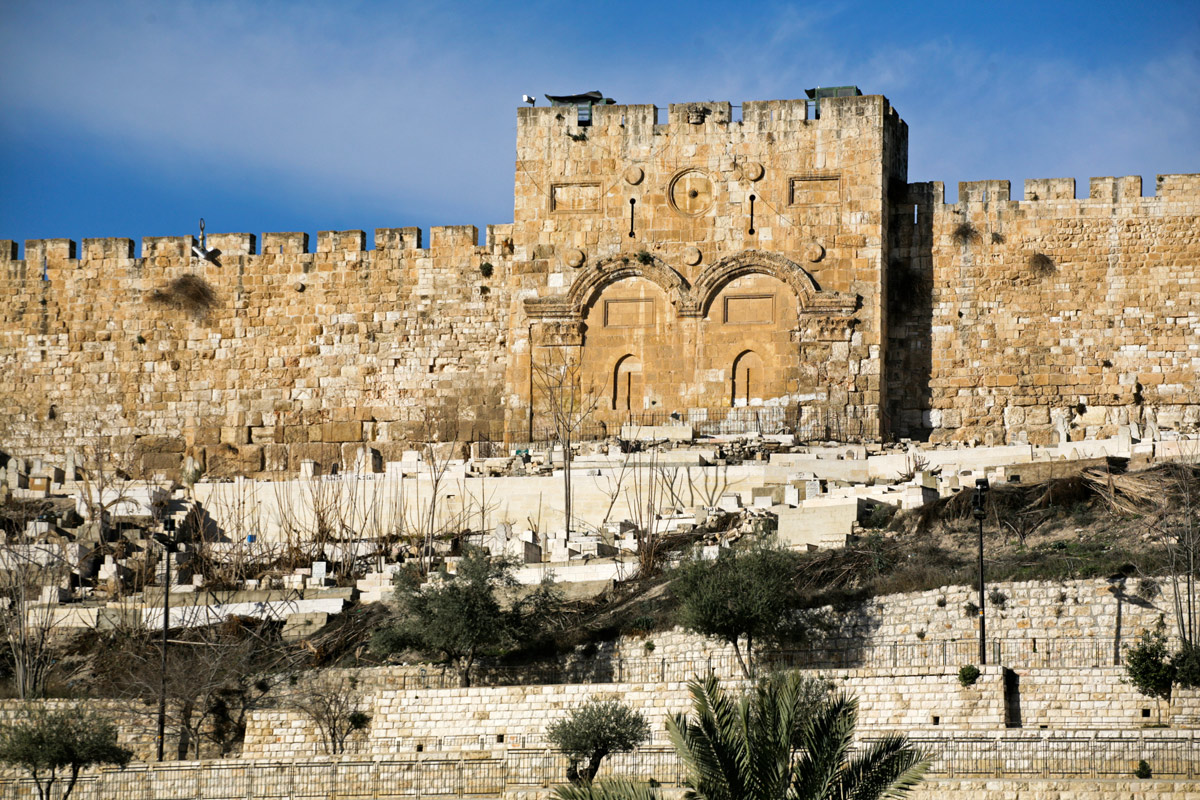
GoldenGate

The East Gate of Jerusalem today

The first man and the first woman had a perfect life. They were free from any problems and would never die. They had a perfect relationship with God, and would personally walk with him in the garden.

Yet they destroyed all of that in their rebellion against God (Genesis 3). Now they faced hard labor, sickness, and death. Their relationship with God was permanently damaged, and they would be forever separated from God.

Their disobedience — their rebellion against God — was their sin. This sin would infect the entire human race through Adam’s descendants, leaving every person separated from God. Humans were no longer capable of having any relationship with God.

But God made a promise to this man and this woman. They would have a descendant who would save the human race from their sin. He would restore their relationship with God.

Over time, God gave more information about the one would save mankind. He was given a title, “The Anointed One”, or in Hebrew, “Messiah”, or in Greek, “Christ”. He would be the sacrifice for sin for the entire world. He would lead his people to freedom and victory. He would rule in peace.  See a more complete list here.

God also gave a specific time for the Messiah. The Messiah would come to Jerusalem on March 29, 33 A.D. [2].

God had given this message about the Messiah to the Jewish people. But as time went on, they were no longer concerned about being saved from their sin. They had devised an elaborate set of rules and laws which gave them confidence that they were were able to personally earn God’s favor. They no longer needed a Messiah to save them from sin.

However, the Jewish nation was often oppressed by other nations. Although they no longer needed (as they believed) a Messiah to save them from sin, they longed for the Messiah to come and free them from their oppressors. They looked forward to the conquering King who would set up a kingdom that would never end.

Then the Messiah came. He came to his own people and his own did not receive him (John 1:11-12). He did not follow the religious laws like he was supposed to, and the religious leaders were jealous of his fame.

Jesus Christ was wildly popular when he was on the earth. He taught like no one else did and he worked spectacular miracles, baffling his enemies and validating his claims to be the Messiah. As his final public act, he caused an explosion in the Jewish religious world by raising Lazarus from the dead (see here).

The hatred of the Jewish leaders was complete. They wanted to cover up the miracle of Lazarus so they determined to kill Jesus. They gave orders everywhere that anyone should report Jesus if they knew where he was (John 11:45-57). Jesus Christ was now a wanted criminal.

Yet as the Passover drew near, it was time for Jesus Christ to enter Jerusalem. It was also time for the city to welcome the Messiah as their king, in fulfillment of the prophecies about him (Daniel 9:24-27). Instead of coming in secret, Jesus came at the head of a massive crowd, cheering him as king.

Why did the crowd welcome Jesus as their King on that day? The miracle of Lazarus had already drawn the interest and the excitement of the people. Jesus had traveled from Galilee to Jerusalem with a large crowd of Passover pilgrims, so they all knew that he was coming. He had spent the Passover (Saturday) in the nearby town of Bethany, so the next opportunity for him to come would be Sunday morning.

Jesus left Bethany with a large crowd of followers on Sunday morning. As He approached the mountain separating him from Jerusalem (the Mount of Olives), he sent two disciples ahead to bring a donkey colt with its mother. The donkey showed his claim as king and fulfilled the prophecy (Zechariah 9:9) that the Messiah would enter on a donkey, the symbol of royalty.

The crowd that accompanied Jesus was met by a larger crowd coming out of Jerusalem. Together, they chanted the Psalm of the Messiah (Psalm 118:24-26), “Hosanna! Blessed is he who comes in the name of The Lord!”

The religious leaders objected to this praise and personally asked Jesus to tell them to stop. But this was the day of Messiah’s coming. If the people did not shout out, the rocks would proclaim him as King!

Through all of this excitement, Luke tells the shocking response by Jesus as he approaches the city. Jesus starts sobbing as the city comes into view. Neither his disciples nor his enemies were able to see through the crowd’s excitement, yet only Jesus saw that these excited people would not receive him. He is given a vision of what will happen to Jerusalem and it brings him to tears. He see the Roman legions surrounding the city, cutting off the supplies and eventually killing the inhabitants. This all happened because they rejected the Messiah.

The people were excited to receive a Messiah of their own design. They wanted a leader to save them from Roman oppression, but they did not want to be saved from their sin. Yet that was His purpose, and that was why He had come. He would be the sacrifice to bring the people back to God.

In less than a week, the same people who were welcoming him as king would be shouting for his death.


Remember!

  • How much do we value a relationship with God? Are we willing to value the sacrifice made by Jesus Christ in order to bring us back to him?
  • As the Messiah, Jesus Christ’s main objective is to free us from sin and bring us back to God. It is as true now as it was in the first century — don’t look for a substitute!
  • The disciples did not understand what was going on until afterward. Don’t miss the important things in life because we are caught up in the moment.


Previous post: Dare to Waste

Categories
encouragement theology

Dare to Waste!

waves-close-up-view-circle-drop-of-water

Jesus had raised Lazarus from the dead (John 11), causing many to believe in him. But this also provoked the anger and jealousy of the chief priests and the Pharisees. They were all united in their plans to kill him (John 11:53).

Jesus had retreated to the town of Ephraim (John 11:54) and stayed there until it was time to come for the Passover. Within a couple weeks of the Passover, He had traveled north from Ephraim through the middle of Samaria and Galilee (Luke 17:11), and joined the bands of Galilean pilgrims as they traveled to Jerusalem [2].

As the crowds neared Jerusalem on Friday, Jesus had split from the group and spent the Sabbath in the nearby town of Bethany. It was there in Bethany that Simon, a healed leper, had hosted a feast for Jesus and his disciples on Saturday night.

During the dinner, Mary shocked the entire crowd. She approached Jesus as he reclined at the table with the dinner guests. She then broke a priceless bottle of perfume and proceeded to pour it on his head. She moved to his feet with the perfume and unbound her hair, using her hair to wipe up the excess from his feet.

The fragrance of this strong perfume permeated the entire house.

Mary’s actions shocked the crowd as she proceeded to anoint his head and wash his feet. But the disciples were deeply scandalized when someone started to add up the cost of the perfume that was wasted on Jesus. Judas lead the disciples in scolding her, saying that this cost over a year’s wage. Why not use that to help the poor?

Jesus’ response to Judas was sharp and abrupt, “Leave her alone!” Her worship of him was more important than even helping the poor.

Mary alone understood that Jesus was coming to die and she was preparing him for his burial. Her story will now forever be joined with the story of the Gospel itself. “She has done a beautiful thing.”

This scene would burn in Judas’ memory. He was still stinging from Jesus’ rebuke three days later when he goes to the chief priests and offers to betray the Lord Jesus Christ.

The other 11 disciples should have known better. They had been following Jesus for the last three and a half years, yet they were so caught up in themselves that they missed what Jesus was trying to teach them.

Mary was the only one who understood what was going on.

This short account opens the final week of Jesus’ ministry on earth. This final week will mark the highest and lowest points of Jesus’ entire days on earth. He will teach his disciples and confront his enemies but there is one primary purpose throughout this week.

He has come to die.


Remember!

  • From the example of Judas, we need to beware lest we become hardened through unbelief. As it says in Hebrews 3:12-13, we need to encourage each other daily!
  • From the example of the 11 disciples, don’t be so caught up in ourselves that we miss what Jesus is saying to us!
  • Finally, from the example of Mary, would we all be so caught up with love for the Lord Jesus Christ that we are ready to lavish our most valuable possessions on him!

Previous post: Greater than Death

Categories
encouragement theology

Greater than Death

Jerusalem Tomb of the Garden

It is a subject that no one wants to talk about, yet it is the one thing that is inevitable for all of us. It is the one constant that unifies every human on earth.

We all will die.

Every culture has its customs and rituals for dealing with death. All of these rituals are ways to show respect for the departed and to comfort the loved ones.

In the ancient Jewish culture, the funeral would last for seven days, with the peak on the fourth day, or “high day” [1] . Friends and neighbors would come to gather around the grieving family and comfort them with loud wailing. The most dedicated friends would help prepare the body for burial by wrapping the body in linen strips and covering it with spices and perfumes. There was no embalming so the body was buried immediately.

The tomb was usually a cave which was built to hold several bodies. After the flesh had fully decomposed, a family member would come in and remove the bones. The entrance to the tomb was covered with a stone in order to keep out thieves and predators, and to protect people from the smell of the decaying body.

At some time during his ministry in Judea (October-December), Jesus had visited Mary and Martha in the small village of Bethany (Luke 10:38-42). He had become very close to the sisters and their brother, Lazarus. After the Feast of Dedication in December, Jesus had crossed the Jordan into Perea, but the sisters were still able to stay in touch with him.

It was now later in the Spring, probably early March, when Mary and Martha send word to Jesus. Lazarus was gravely ill, and they hurriedly dispatch a messenger with the news, “your friend is sick”.

Jesus received the news and announced that this would not end in death. Rather, this event was for the glory of God. Now that he received the news about a close friend who needed him, Jesus waits in Perea for two more days. 

Lazarus had already died by the time the messenger reached Jesus. The point is re-emphasized — He loved Mary and Martha and Lazarus, yet he waits for two more days. There is something greater than restoring Lazarus; there is something greater than comforting the sisters. It is God’s glory.

The religious leaders in Jerusalem had already announced that they wanted to kill Jesus, and Bethany was only two miles from Jerusalem. When Jesus announced his return to Judea, his disciples were concerned for his safety (and their own). Yet Jesus was clear on his intentions: Lazarus was dead and he was going to go raise him.

Jesus arrived in Bethany on the fourth day, the “High Day” of mourning. Lazarus had been buried for four days and a large crowd from Jerusalem had come to console Mary and Martha. Martha met Jesus outside the town and tells him, “Lord, if you had been here, my brother would not have died.” Yet even still, Martha trusts in Jesus. She is prepared that whatever He asks of God, God will give to Him.

“Your brother will rise again”, Jesus tells her. Martha knew about the resurrection of believers, but she still did not understand. Jesus tells her, “I AM the resurrection and the life. Whoever who believes in me, though he is dying, yet he will live.”

Jesus is not just able to restore life. He IS life. Jesus uses the name of God (“I AM”) and declares that he is God and that he is life.

Do you believe this, Martha? Her hope was not on how she felt, it was that she believed in the giver of life.

The next meeting, with Mary, brings Jesus to tears. He will soon bear the weight of the entire world on the cross, yet for now he must bear the grief and heartache of this small town as they stand at the tomb of Lazarus.

Martha objected to Jesus’ command to roll away the stone covering of Lazarus tomb. It had been four days, and the stench would be unbearable. Yet she obeys when Jesus mildly rebukes her and reminds her of the glory of God.

With the stone rolled away, Jesus thanks the Father. The Father has heard his prayer, as he always does, and there will be no doubt that this is from God. Jesus then shouted in his top voice, “LAZARUS, COME OUT!”

I cannot even picture the astonished crowd as Lazarus staggers out of the tomb, still in his linen wrappings. Jesus commands the people to unbind him.

“It is a peculiar thing, you cannot get any instruction in the Bible as to how to conduct a funeral, for Jesus broke up every funeral He ever attended by raising the dead.” – D.L. Moody

It is not surprising that many believed in Jesus that day. Nothing had ever happened like this [8].

But back in Jerusalem, the religious leaders hastily convened a meeting of the Great Sanhedrin. In their minds, this miracle had sparked a national crisis. If more people believe in him, they might get in trouble with Rome.

Therefore, they concluded that they need to contain this belief in Jesus at all costs.

They need to kill him.

It is only a few short weeks before the final Passover, where Jesus will come to Jerusalem and die for the world. Now, everyone is talking about Jesus and his fame is going across the entire country. This miracle has also steeled the resolve of the Jewish leaders. They now are actively looking to kill him.

Jesus heads north to the small town of Ephraim, where he will await the time for one final trip to Jerusalem.


Remember!

  • Jesus breaks everyone’s preconceived notions on how he should behave. He delays when they expect him to hurry, he cries with those grieving, and then he raises the dead! Never underestimate the Lord Jesus Christ!
  • If you have not believed in Him, do not let any more time go by. He is the resurrection. He is the life. If you believe in him, you will live again!
  • Don’t be hardened by avoiding the truth. The Jewish leaders never doubted the miracle, but they loved their sin more than they loved what they knew was the truth!
  • Lean on the truth when you are hurting. Jesus reminded Martha of what she believed.


Previous post: My Sheep Hear my Voice

Categories
encouragement theology

My Sheep Hear My Voice

sunset-7416_1280

Almost three months have passed since Jesus was last in Jerusalem. Since then, Jesus had sent out seventy to preach the gospel, visited the sisters Mary and Martha, and taught many people throughout Judea (Luke 10:1-13:21).

It was now winter (John 10:22) as Jesus returned to Jerusalem for the Feast of Dedication.

The Feast of Dedication, known today as “Hanukkah” takes place in December. It commemorates the time when, in 165 B.C., the faithful Jews were able to rededicate the temple after it had been polluted by the Syrian oppressors.

It is during this time that Jesus is accosted by the Jews. They literally closed in on Jesus demanding that he tell them once and for all: Is he the Messiah?

Jesus had already told them several times, sometimes indirectly (e.g. Luke 4:16-21) and sometimes directly (e.g. John 8:58-59). The Jews had already tried to kill him on many occasions after speaking these words.

The problem was not that they needed more information. They already knew the answer but had decided not to believe.

They did not believe because they were not his sheep. Jesus returned to the pastoral analogy to tell about his true sheep. He has a close, intimate relationship with his own sheep. They hear his voice and they follow him. He knows them.

But at this time, when confronted by people who refused to believe him, Jesus gave some of the most reassuring words to his own sheep:

He gives them eternal life. They will never perish.

They are in his hands, and in the hands of The Father. Nothing will ever take them away from him.

Jesus repeated his oneness with the Father. The people wanted to kill him for daring to speak it, because it was the utmost blasphemy to say that he was God.

Unless he actually was God!

Jesus appealed to the Old Testament scriptures that they all revered. Psalm 82 refers to wicked men as “gods” when they represent God on earth. How much more is it appropriate to say this to one who was actually sent by God!

Furthermore, Jesus’ words already said who he was (see John 5 and John 8). But if they had any reason to doubt his words, his actions showed he was God (see John 5, John 6, and John 9).

The chapter ends with a group of people who do believe. Jesus returned across the Jordan River (to Perea), where people remembered John the Baptist, and that he had announced Jesus as the Messiah. John 10 concludes with saying that many believed in him there.

Even after he was dead, John’s ministry continued to flourish.


Remember! 

  • There are many people who refuse to believe. They don’t need a better argument, they need to come to God.
  • We are promised a close relationship with Jesus Christ and we are promised eternal life. There is NOTHING that will take us away from him! See also Romans 8:35-39.
  • We may never know all of the results when we teach God’s word. John the Baptist never knew how his words would be used long after his death.


Previous Post: The Good Shepherd

Categories
encouragement theology

The Good Shepherd

flock-of-sheep-49666_1280

Psalm 23
The Lord is my shepherd; I shall not want.
He makes me lie down in green pastures.
He leads me beside still waters.
He restores my soul.
He leads me in paths of righteousness
for his name’s sake.
Even though I walk through the valley of the shadow of death,
I will fear no evil,
for you are with me;
your rod and your staff,
they comfort me.
You prepare a table before me
in the presence of my enemies;
you anoint my head with oil;
my cup overflows.
Surely goodness and mercy shall follow me
all the days of my life,
and I shall dwell in the house of the Lord
forever.


The Lord is my shepherd.

How often do we forget that God will guide us, care for us, and protect us?

Jesus Christ takes up the same analogy in his last public sermon. In John 10, he makes two specific statements about himself, showing that he is God, and showing his care for us as sheep.

“I am the door”. Those who enter by Him will be saved and will find safety and satisfaction.

“I am the good shepherd”. He will care for us, to the point that he will lay down his life for us.

The previous chapter (John 9), shows Jesus demonstrating that he is the Messiah by healing a blind man. This stirred up a controversy because he healed the man on the Sabbath. He had healed the blind man, but how could the Messiah break the Sabbath traditions? Jesus used the man’s blindness as an analogy for spiritual blindness. The blind man now believed Jesus and could see. The Pharisees, on the other hand, were blinded by their unbelief.

The scene does not change between John 9 and John 10. Now, in John 10, Jesus points out these same Pharisees who refused to believe. They are not real shepherds of the people, but are instead thieves and robbers, who do not care for the flock.

Jesus then delivers his final public sermon. He recounts three aspects of the life of a shepherd.


Gathering the sheep

First, the shepherd gathers his own sheep from the sheep pen (sheepfold, John 10:1-6). The sheep pen contains several flocks and is guarded by the gatekeeper. The shepherd calls out his own sheep from the multitude, calling them by name. The sheep hear his voice and he leads them out.

The contrast is with the thieves and robbers. They cannot enter through the door and the sheep do not know them.

Just like the shepherd, Jesus will call his disciples out from Israel. He knows each of his own by name and they will know his voice. They will not follow the false leaders.


Sheltering the sheep in the pasture 

Secondly, the shepherd brings the sheep to pasture and guards the doorway to the field shelter (John 10:7-10). The small enclosure at the pastures allows the sheep both protection and shelter from the elements. As the door, the shepherd both admits his own sheep and keeps out predators.

Jesus uses the ancient name of God when he states, “I AM the door of the sheep”. This is the third statement in John’s gospel account where Jesus uses the Old Testament name of God to show who he is (see the complete list here).


Risking his life to protect the sheep

Finally, the shepherd personally puts his own life on the line against dangers in order to protect the sheep (John 10:11-15). It was common in that day for a lion, a bear, or a wolf to attack the flock and attempt to kill any shepherd who may defend the sheep (see 1 Samuel 17:34-35). A hired hand would quickly leave this place of danger, but the shepherd was committed to the sheep, defending them against all possible dangers.

Jesus again uses the ancient name of God when he states (for the fourth time in John’s gospel account), “I AM the good shepherd”. The word for “good” is not just morally right, but also shows excellence and beauty. He is the greatest shepherd.

He also has other sheep outside of this fold (John 10:16). He will gather them together into one flock. Both the Jews and the Gentiles will be united together in the Messiah’s kingdom.

Jesus also promises, as the Good Shepherd, to lay down his life and to take it up again (John 10:17-18). He says four times in this passage that he will lay down his life, and two times that he will take it up again.

In less than 6 months, Jesus will be arrested and killed as a common criminal. Three days later, he will rise again. Don’t miss the point — this is not coming as a surprise! Jesus Christ will die and rise again by his own will.


Remember!

  • Jesus is the Door! He is the way to shelter and protection when you need him. You can go in and out from his shelter and find satisfaction.
  • Jesus is your Good Shepherd! He is the true leader who watches over you and who gave his life for you.
  • Nothing comes as a surprise for Jesus! Even his own death was by his own will.


Previous post: Are you blind?

Categories
theology

Are you blind?

light-bulb

How has Jesus changed you?

How has he challenged you?

The next chapter in John’s gospel account tells the story of a man who was changed after an encounter with Jesus Christ. Jesus met him as a blind beggar and healed him by spitting on the ground, rubbing the mud into his eyes, and telling him to go and wash. The man washed and for the first time in his life, he can see!

There is only one problem.

Jesus did it on a Sabbath!

On a physical level, Jesus challenged the blind man. Go across the city to the Pool of Siloam and wash the mud out of your eyes. The man obeyed and he was given sight.

On a spiritual level, Jesus challenged the religious Jews. They believed in the Messiah, and were looking forward to his coming. They believed that they would know the a Messiah because he would make the blind to see. But they also believed in their thousands of religious laws. Now the Messiah has come, but they don’t like him.

In John 8, Jesus challenged their religious preconceptions. They believed that God would save them, simply because they were Abraham’s descendents. But Jesus taught that their family relations do not matter. They needed to believe in Jesus Christ in order to have eternal life.

In John 9, Jesus challenged their religious traditions. Their traditions held a litany of Sabbath laws, yet Jesus broke them in order to heal a blind man. This forced the issue: you can either believe that Jesus is the Messiah or you can believe that he is a criminal.

Some of the people believed in Jesus the Messiah. Most of them would rather believe that he was a criminal.

This chapter is unique in that, during most of the narrative of this chapter, Jesus is absent. Jesus did not directly confront the Jewish leaders in this chapter, but instead, he sent an eyewitness. This eyewitness was a blind man, an outcast from society. Everyone  — even Jesus’ disciples — believed that the man’s blindness was a punishment for someone’s sin. When under pressure, his parents did not even stand up for him.

The leaders brought the man in for questioning. In their minds, Jesus could not have healed the man because he did not respect their traditions. They tried three times to pressure the man into recanting, and then “cast him out” after the man confronted them.

How did the man leave them speechless? He simply told his own story, “Though I was blind, now I can see”. Jesus had given the man sight, yet the leaders were blind to the truth.

As the scene ends, Jesus met the man and showed him who he is. The man was physically blind, but now he could see, both physically and spiritually. The Pharisees, by contrast, had chosen their own beliefs over the clear facts. They thought they could see, but they were left totally blind.


Remember!

  • How has Jesus changed your life?  When you are challenged by others, your own experience is more effective than any persuasive argument.
  • When is the last time that the words of Jesus challenged you? If you have not been challenged by Jesus, then you may be on the way toward blindness.


So surrender the hunger to say you must know

Have the courage to say I believe

For the power of paradox opens your eyes

And blinds those who say they can see

-Michael Card


Previous Post: The Truth Will Set You Free

Categories
encouragement theology

The Truth Will Set You Free

barbed-wire-fence

“The truth will set you free.”

This popular phase has adorned institutes of higher learning and is commonly quoted by intellectuals, and others who value a good education. “When you are exposed to truth, you will be able to throw off the shackles that have enslaved you”; “Only when you learn will you reach your full potential.”

Others use this phrase as encouragement to cleanse yourselves from the trappings of any lies. They see being truthful as freeing yourself from the entanglements caused by your deception, “tell the truth and free yourself”.

But is Jesus really talking about education and self-fulfillment? Look closer at all that Jesus said:

So Jesus said to the Jews who had believed him, “If you abide in my word, you are truly my disciples, and you will know the truth, and the truth will set you free.”

Many believed in Jesus after his last statements. There were also several believers in the crowd from the recent Feast of Tabernacles (see John 7:31). Jesus then turned to the believers. It is not enough to simply agree with the truth about Jesus. To be a true disciple of Jesus, you need to abide in his word. 

What does it mean to abide in his word? The word for “abide” is meno (μένω), which means to take up residence; to continue; remain; not depart. It means to stay connected to His word. Jesus uses the same word, “abide”, in John 15 when he compared his disciples as branches to a vine. We abide in Him when we stay connected to him. We need to make his word our source, our guide, our refuge, and our comfort.

What is the truth? Jesus made it clear that the freedom is from sin, yet the people already believed that they were free. Part of the truth is to shatter their false security so that they may know that they need to be rescued from sin. But Jesus, himself, is the truth (John 14:6). All who believe in him will be rescued from sin (John 3:14-18).

What happens to the true disciples who abide in His word? They will know the truth that makes them free. The true disciples will know the truth about freedom from sin and receive eternal life with God.

“By nature far from Him, they were bondsmen. Only if they abode in His Word would they know the truth, and the truth would make them free. The result of this knowledge would be moral, and hence that knowledge consisted not in merely believing on Him, but in making His Word and teaching their dwelling – abiding in it.” – Alfred Edersheim [3]

In the previous study on John 8, we had covered that Jesus commanded the listeners to “Follow Me” four times in this chapter. Each time he repeated the command, he made the command more specific and had increasingly hostile responses. In each of these four commands, Jesus also gave a promise for those who follow him:

  • “Follow Me” (John 8:12-20)
  • “Believe that I AM” (John 8:21-30)
  • “Abide in my word” (John 8:31-47)
  • “Keep my word” (John 8:48-59)

The final two commands, discussed here, are both related to Jesus’ Word. What makes the difference between a true disciple and an unbeliever? Their response to His Word.


“Abide in my word”

It is those who abide in His Word that are his true disciples. The promise, discussed above, is that the true disciples would know Jesus and be made free from sin.

But the opposition to Jesus has increased severely. The Jews did not believe that they need anything else other than to be a descendant of Abraham. They would rather kill Jesus than face the truth. They dismissed Jesus as an illegitimate child, who is not worthy of teaching them.

The response by Jesus was the strongest yet. There are only two families: the family of God and the family of The Devil. If they do not love the one sent by God, then they are children of The Devil! How are they identified as children of The Devil? Because they do not love Jesus and they cannot bear to hear his word.


“Keep my word” 

“Truly, truly, I say to you, if anyone keeps my word, he will never see death.”

Jesus also gives the promise that those who keep his word will never see death. Their bodies may die but they will never be separated from God (See Revelation 21:1-8).

“Now outwardly, of course, believers die as others die. And yet the wonderful thing is that the words of Jesus are absolutely true: the believer does not see death. What does he see? He sees the entrance into the Father’s house. Death, we are told, is our servant. How does death serve us? By ushering us into the presence of God.” – H.A. Ironside [4]

The opposition by the Jews goes beyond the personal attacks. They now accused Jesus of being demon-possessed. The response by Jesus was the promise here, but he also relied on the glory from God the Father.

The Jews were shocked that Jesus may claim to be a greater man than Abraham, yet that was not what Jesus was saying. He was not a greater man than Abraham. He was the God of Abraham!


Remember!

Things to remember from this study:

  • Jesus is the truth. If you want to be free, know Jesus! To be free from your sin, get closer to Jesus Christ.
  • There are only two families: the family of God and the family of the Devil.
  • Get close to Jesus by abiding in His Word!


Previous post: Light of the World

Categories
encouragement theology

Light of the World

fire-in-the-sky

I try to picture the scene as if I were there in person. The Feast of Tabernacles, one of the biggest celebrations on the Jewish calendar, has been going on for the past week. Jewish people from all over the world have come to Jerusalem to live in temporary shelters and celebrate this occasion.

The Feast of Tabernacles was a time for the Jewish people to remember their ancestors when they wandered in the wilderness (see more details here). The ceremony of water commemorated God’s miraculous provision of water throughout the years of desert wanderings. This feast also looked forward to the Kingdom of the Messiah, when God would again personally lead his people and provide for their needs.

But the Feast of Tabernacles also celebrated the light of the Messiah. God had personally led their ancestors through the desert in a cloud by day and a fire by night. Four giant candelabra in the temple courts (more like giant torches) were lit during the feast, illuminating the entire city of Jerusalem.

But now the feast had ended and people were preparing to leave. The four giant candelabra — no longer burning —  stood as silent reminders of the great celebration. As the people look on, Jesus walks by these great candelabra and speaks to the crowd,

“I am the light of the world.”

 But he does not stop there:

“Whoever follows me will not walk in darkness, but will have the light of life.”

To roughly translate this, He was saying, “These giant torches that you see are now finished. But I am the real light and I will never go out. Follow me and I will give you light and I will give you life.”

Jesus also uses the Hebrew name of God, “I AM”. He actually refers to himself as “I AM” several times in this passage:

  • “I AM the light of the world”
  • “Unless you believe that I AM you will die in your sins”
  • “When you have lifted up the Son of Man, then you will know that I AM”

This chapter is very direct, very specific, and very confrontational. Jesus gives the command to “Follow Me” four times in this chapter (John 8). Each time he repeats the command, he makes it more specific and he receives increasingly hostile responses. In each of these four commands, Jesus also gives a motivation for following him:

  • “Follow Me” (John 8:12-20)
  • “Believe that I AM” (John 8:21-30)
  • “Abide in my word” (John 8:31-47)
  • “Keep my word” (John 8:48-59)

We go through the first two commands in this study and will cover the second two commands in the next study.


“Follow Me”

In the statement above, Jesus said that he is the light of the world. Jesus is the God that the Jews claim to worship, and he offers the light of life to all who follow him. The Pharisees interjected with, “Who are you to speak like that?” Jesus responded that he was sent by God the Father, and they do not know the Father if they do not know him.


Believe that I AM”

Again, Jesus referred to himself as the Hebrew name of God, “I AM”. This time he was very direct to the people: “Unless you believe that I AM” you will die in your sins. You can either believe Jesus or reject him. But if you refuse to believe Jesus you will face an eternity separated from God. The people reply with, “Who do you think you are?” Jesus responded that he speaks the truth that was given to him from the Father who sent him. When they see the Son of Man lifted up (on the cross), then they will know that “I AM”.


Remember!

Things to remember from this study:

  • If you are waiting to believe in Jesus, you are running out of time! He is the light of the world who will give you life. But if you refuse to believe, you will die separated from God.
  • If you do believe in Jesus, follow him! Let Him be your counselor, your guide, and your illumination.
  • Jesus always appealed to the Father in these times of conflict. You have a higher authority and you are not alone!


Previous Post: Don’t Waste Your Life!

Categories
encouragement theology

Don’t waste your life!

Guilt…

Punishment…

Forgiveness…

Restoration

This short drama is inserted in the middle of Jesus’ discourses during the Feast of Tabernacles. Many scholars debate where this story belongs, or if it should even be in the Bible at all [1].

This story is also beloved by many people in our culture, many who may not know much more about Jesus. It is popular to compare people today with either the guilty woman or the accusing Pharisees. Most of these comparisons are made in ways to make the storyteller look good. But very few people who tell this story realize who this story is really about.

It is about Jesus.

 Jesus came down from the Mount of Olives where he had spent the night on the open ground. He came to the temple and began teaching the people about the the Kingdom of God. As was often the case, his teaching was interrupted by a real-life application.

A commotion in the crowd stops his teaching. Out of that commotion comes a gang of Pharisees and their scribes, dragging a woman with them. They set the woman in front of Jesus and announce that she has been caught in adultery. They remind Jesus that the law of Moses commands that she be stoned to death, but what does he say? 

The Pharisees laid a trap for Jesus. God is just, and if Jesus declares God’s Justice, then she must be stoned. This would break the Roman law and destroy Jesus’ reputation for compassion.

But God is also merciful. If Jesus declares God’s mercy, then she would go free. But for Jesus to do so would break the law of Moses and destroy Jesus claims to be the Messiah.

How do you reconcile God’s justice and his mercy?

Jesus reconciled this for woman in the same way that he reconciles his justice and mercy for you and I. She sinned. She broke God’s law. She was guilty. The punishment was death.

Someone would die.

The accusers would not find the justice they were seeking. It took Jesus to only remind them of their own sin for them to walk away, one by one. They did not press the charges, but they also did not ask for forgiveness. The simply walked away. The entire crowd left.

Many people like to end the story with the accusers leaving, but they miss the woman’s restoration. Jesus never skipped over her sins. Instead, he left her with a command, “Go and sin no more”.

“You are restored, now stop wasting your life.” 

It will be less than six months away that Jesus will pay for this woman’s sin. He will also pay for your sin and for my sin. He will pay for the sins of the whole world. 

Stop wasting your life!


Previous post: If Anyone is Thirsty

Categories
theology

If Anyone is Thirsty

It has been six months since John’s last record of Jesus on the shores of Galilee (John 6). During that time, Jesus has been quietly teaching his 12 closest disciples.

Many events have occurred during these six months [6], but there were three significant events that happened in rapid succession. First, Peter confessed, on behalf of the rest of the 12 disciples, that they finally understood who Jesus truly is. He is the Christ (the Messiah) and he is God  (Matt 16:13-20, Mark 8:27-30, Luke 9:18-21).

Secondly, Jesus delivered news to them that left them devastated. Jesus’ popularity had been growing, with the disciples had looking forward to the approaching kingdom of the Messiah. Instead, Jesus dismissed the crowds and had taken his disciples away to be alone. But then he delivered the most tragic news: He will be rejected. He will be arrested. He will be killed. He will rise again (Matt 16:21-26, Mark 8:31-37, Luke 9:22-25).

This was the first time Jesus told them that the was going to die. The disciples were deeply grieved by this news, and it may have been why Jesus brought his three closest disciples (Peter, James, and John) away to a high mountain. It was on that mountain that they see Jesus shining in brilliant glory and talking with Moses and Elijah (Matt 17:1-8, Mark 9:2-8, Luke 9:28-36).

Jesus had taken the last six months to be apart with his disciples. He had taught them what would happen to him, and what they would need to expect in order to be his disciples. Now, the time has come to enter back into the controversy. Jesus would take them back to confront the crowds and to offer one more opportunity to believe in him.

Jesus headed South to Jerusalem. It had been at least a year since Jesus was back in Jerusalem (John 5), and now the leaders want to kill him. Their hatred had been festering for the past year, turning to murderous rage. The two opposite religious groups, the Pharisees and the Sadducees, united in their mutual hatred for Jesus.

The Feast of Tabernacles is at hand, one of the three great celebrations on the Jewish calendar (Passover and Pentecost are the other two). It is a time of tremendous joy and feasting as the Jews celebrate their harvest and spend a week in temporary shelters made of Palm branches.

Jesus was the main topic of conversation during this week-long feast, but few believed in him. Even his own brothers did not believe. The people privately debated who he really is, but all public discussion is forbidden. The Jewish leaders did not want any more debate about Jesus. They only wanted to kill him.

Jesus came down in the middle of this week-long feast, showing up in the temple and astonishing the people with his teaching. They were surprised that he taught with authority, yet he has not been trained in any of the rabbi schools. Jesus replied that his teaching is not his own, but it is from God.

In the eyes of the Jewish leaders, Jesus was a lawbreaker. He had healed a man on the Sabbath during his last visit to Jerusalem the previous year. But they were inconsistent with their own laws. Jesus uses circumcision as an example that there are some things which are higher than the Sabbath. 

Every day during this week-long celebration, the priest would leave the temple, fill a golden pitcher with water, and ceremoniously carry back the pitcher and pour the water on the altar. On the final day, the people would bring their palm branches and proceed with the priest as he gathers the water and brings it back to the temple.

It is during this time, on final day of the celebration, that Jesus breaks the silence of the crowd by shouting out, “If anyone is thirsty, let him come to me and drink. Whoever believes in me, as the Scripture has said, Out of his heart will flow rivers of living water.’”

Jesus has made one more appeal to this unbelieving crowd. The only way to eternal life is do believe in him. The opportunity to come to him will not last much longer. The results were mixed:

  • Some wanted him dead
  • Some think he has a demon
  • Some think he is just a good man
  • Some are in awe of him
  • Some believe in him

This is a long chapter with several messages that you can personally apply. However, there is one outstanding message that I see across this entire chapter. Jesus was met with opposition through the entire week, yet he continues to offer the invitation. Believe. Believe. Believe in him.

But his invitation also has a warning. The time is short to accept his invitation and to believe in him. Soon, it will be too late. “I will be with you a little longer, and then I am going to him who sent me. You will seek me and you will not find me. Where I am you cannot come.”

For those who do not believe in Jesus, I beg you to consider him before it is too late. A time will come where he will no longer keep prompting you.

For those who are enjoying a life of sin, I beg you to let go of the sin before it is too late. You will understand God’s teaching when you are ready to do what he says. But the time is short and soon, it will be too late.


Previous post: The Bread of Life

Categories
theology

The Bread of Life

A farmer went out to sow seeds in his field. Some seeds fell on the path and were eaten by birds. Some seeds fell on rocky ground, where the young plants were withered in the shallow soil. Some seeds fell among weedy soil and were choked out by the weeds. Other seeds fell on good soil and produced a crop. 

Jesus had told this parable to the crowds and then later explained its meaning to his disciples. The different soils were an analogy of how people respond to God’s word. Some refuse the word and with many people it is not possible for the word to grow in their hearts. But there are a few that will be the good soil — those who will take the word and grow. (Matthew 13:1-23; Mark 4:1-20; Luke 8:4-15)

John 6 shows an example of the different soils in real life. It starts with the pinnacle of excitement as Jesus had fed a massive crowd (probably about 20,000 people) and they all wanted him to be king. But they start to fall away when Jesus gave them a challenge. Sadly, it is only a few that remain to be the good soil. 

This passage can be best summarized by Jesus’ statement about himself:  “I am the Bread of Life.”

Jesus had fed the crowd the day before and now the people want more. They had tried to make him king and were rejected. Now they have come back to try again. 

Jesus responded simply: they came back for the food, but what they need is eternal life. They need to be born from God.

The rabbis had taught the people that God sets his seal on the one who is truth. Jesus told them that God had sent him and had set his seal of truth on him. They did not need to work but to believe.

The Jews asked Jesus to validate his claims with a sign. According to their traditions, they believed that the true Messiah would provide manna for them, greater than even what was given by Moses. Jesus corrected them that the manna came from God, not from Moses. But manna was only temporary. They need the true bread from heaven which will give eternal life.

Jesus is the true bread. All you need to do is to come to him and believe in him for eternal life. He alone can give eternal life.

This would be simple to understand and believe. But Jesus takes the analogy further. He is the bread of life, and you need to eat his flesh and drink his blood. What does that mean?

The Jewish tradition held that the law and the commandments were the bread and wine for a believing Jew. They had achieved true wisdom when they depended totally on their law. Jesus was saying to this devout Jewish audience to stop looking to the law and their traditions for life, and to instead look to him. They will receive eternal life when they totally depend on him.

They understood it but they did not accept it. It was offensive to them. Given the choice between their traditions and Jesus, many of the disciples left Jesus for their traditions. 

“Here, then, we are at the parting of the two ways; and, just because it was the hour of decision, did Christ so clearly set forth the highest truths concerning Himself, in opposition to the views which the multitude entertained about the Messiah. The result was yet another and a sorer defection. ‘Upon this many of His disciples went back, and walked no more with Him.’” [1]


Previous post: How do you respond to crisis?

Categories
encouragement theology

How do you respond to crisis?

How do you respond in times of crisis?

In the next scene in John’s gospel account, we see both Jesus and his disciples at a time of crisis. It is often at these times, when we are at our limits, that we find out what we have and what we truly need.

For Jesus, this was a critical turning point in his ministry.  He has spent the last two and a half years presenting himself to the nation of Israel, showing that he is their king.  Jesus had spent the entire day teaching and healing a huge crowd of over 20,000 people, and now they want to make him a king by force. The people like what he has to say and are interested in his miracles, but they refuse to submit to him as Lord. Jesus will spend his remaining year preparing both his disciples and himself for his upcoming sacrifice. 

The disciples must have been filled with shock and dismay. They had returned from their own teaching tours of Galilee and personally witnessed Jesus feeding this massive crowd. Everyone loved Jesus and the disciples were sure that he was now going to rule as their king. But instead, Jesus abruptly sends them away and dismisses the crowd. Now they are on their own, alone on the lake, rowing toward the other shore.

Jesus spends the night alone in prayer with the Father. He draws his heart close to the Father as he deals with his disappointment over the crowd that would not believe. He is close to the Father as he considers his upcoming rejection, death, and coming back to life.

As Jesus is praying on the mountain, he looks over the wide expanse of the lake below him. There, out on the lake, are his disciples in the boat, struggling against the wind. The wind picks up as the night goes on, and his disciples row harder. Jesus sees them struggle as he continues to pray.

After 9 hours, Jesus ends his time of prayer and walks out to his disciples on the water. It is now past 3:00am and they have been rowing all night. The disciples see him walking to them on the water and panic. It must have been a very unnatural sight to see Jesus walking over the waves to them. Through their disappointment and exhaustion of that day, they could only believe that this was a ghost.

Jesus calls out to them and joins them in the boat. Immediately, the waves are calm and they are at their destination. The astounded disciples are now ready to worship him as God. For as long as they had been with Jesus, and as much as they had seen, they still had not believed in him as God.

They did not understand about the loaves, but their hearts were hardened. Even in the presence of his great miracle, his own disciples were reluctant to believe in him as God. It is not enough to believe good things about Jesus, they needed to accept him as God.

Both Jesus and his disciples were in a time of crisis, but in the end the answer was the same.  They needed to lean on God during their time of peril. Jesus spent time with God first, and then went out to his struggling followers. The disciples tried to fight the wind on their own and completely missed the presence of the Lord with them.


Previous post: How do you handle interruptions?  

Categories
encouragement theology

How do you handle interruptions?

What do you do when your plans are destroyed? How do you react when your day is thrown into chaos?

How do we handle it when God sends an opportunity in the form of a major interruption?

I have been studying the life of Jesus Christ, trying to understand more about his life and his ministry. The recent study in John 5 demonstrates that Jesus was fully God.  He was fully equal to God the Father in his works, in giving life, and in authority. There are no secrets between the Father and the Son.

But Jesus was also fully human. He did not exercise his divine power unless he was directed by the Spirit. Jesus had to grow and learn. He got tired. He felt pain, hunger, and loneliness like the rest of us.

Jesus would also make plans which would get interrupted. One of the best examples of this interruption comes in the beginning of John 6.

Jesus has had an extensive ministry in Galilee for about a year and a half.  He has led his disciples, taught the people, and healed many.  His popularity has grown rapidly, to the point that he often cannot even enter towns because of the crowds that follow him.

But along with his popularity, the opposition to Jesus has also grown dramatically.  The Pharisees in the synagogues were not pleased when Jesus challenged their rules about the Sabbath.  As shown in John 5, their anger further turns to murderous rage when Jesus tells them that he is God. Their unbelief has become so entrenched that they interpret Jesus’ miracles as a work of Satan (Matthew 12:22-32, Mark 3:22-30).

And so Jesus’ ministry in Galilee comes to a close.  Jesus has gone across Galilee proclaiming that he is the Messiah.  He even sent out his disciples to make sure that every town and village has heard.  His popularity continues to grow, but so does the opposition and unbelief.  And now the word reaches Jesus that John the Baptist has been murdered by King Herod, who is now looking for him.  Added to his opposition is now political intrigue.

One of the final events of Jesus’ northern ministry happens on the shores of the Sea of Galilee, yet what is most striking is how much of this event is unplanned.  Jesus takes his disciples away to a desolate place, away from the opposition and intrigue, so that they can get some time of rest and teaching.

But as is often the case, plans are interrupted by providence. A huge crowd of over 20,000 people followed them on foot and were waiting for them as they dock the boat [6].  Jesus saw the crowd and responded with compassion. These people were lost and needed a shepherd, and so he taught them and healed the sick.

 Jesus spends the entire day among the people until the evening (about 3:00 pm), when he is interrupted by the disciples.  It is getting close to dinner time and no one had brought provisions.  Jesus instructs the disciples to not stop the teaching, and adds, “you give them something to eat”.  Going further, he asks Philip where they could buy enough bread for these people. Philip responds with their hopeless situation.  Even if they could come up with 8 months salary, they still would not even have a single bite for everyone!

Andrew located one boy who had brought five barley loaves and two small fish, but what are they for such a crowd? Jesus had the disciples sit everyone down while he took the loaves, gave thanks, and broke them.  He then began to distribute the broken pieces until everyone had as much as they wanted.  The disciples gathered up the leftovers, filling up 12 bushel baskets!

There was no mistaking this miracle.  A crowd of over 20,000 people had witnessed and took part in the miracle.  The crowd’s reaction also confirms the miracle, “This is indeed the Prophet who is to come into the world!” (John 6:14).

This is a very well known Bible story.  Many Sunday School lessons are about the “story of the five loaves and the two fish”.  Other than the Resurrection, this is the only other miracle described in all four Gospel accounts.  It is easy to become so familiar with the story that we miss what is happening, but here are a couple important points to remember:

  • This account is not about a boy who was willing to give his lunch away.  Nor is this account (directly) about any one of Jesus’ disciples, including Philip and Andrew.  This is about Jesus.  This is written so that may know that Jesus is the Messiah, and that by believing we may have life in his name (John 20:30-31). 
  • Jesus is still God, even when there is an interruption, and even when there is a crisis.  God is not surprised by interruptions. 
  • Jesus instructed his disciples, “You give them something to eat”.  He provided the food but they were to be the ones to give it to the people. [5]


Previous post: Jesus says that he is God

Categories
theology

Jesus says that he is God

Who is Jesus?

I started out this study of John’s Gospel account with this same question: “Who is Jesus?“.

In only five chapters so far, Jesus’ actions have demonstrated who he is:

  • He has superior knowledge. He knows Philip, Peter. And Nathanael in John 1. He knows the Samaritan woman in John 4.
  • He has power over natural elements in John 2.
  • He has authority over the temple worship in John 2.
  • He knows more than the greatest teachers in John 3.
  • He is greater than John the Baptist in John 3.
  • He breaks down prejudice and social stigma in John 4.
  • His power is not confined by distance in John 4.
  • He is above superstitions and religious rituals in John 5.

 Jesus has come with a specific message: There is a spiritual world beyond what we see here (John 3:1-15, John 4:7-15). Jesus is the Messiah and we need to believe in him (John 1:12, John 2:11, John 2:23-25, John 3:14-18, John 3:36, John 4:41-42, John 4:48, John 4:53).

But why should you believe in Jesus? Jesus takes the time in this chapter (John 5) to give one of the clearest and most direct reasons for why you should believe in him. He also warns you that if you don’t believe in him, you are separated from God and are headed for judgment.

Jesus has just healed a man and told him to “work” on the Sabbath. This draws an immediate response from the Jewish leaders, who are angered at him for breaking their Sabbath traditions. And what is Jesus’ response?

 He agrees with them. 

But Jesus then tells them that he can do what he wants on the Sabbath because he is God!

Jesus shows them in specific ways that he is equal to God. He then shows them the evidence of why they should believe him. He finally concludes by condemning them for refusing to believe, even in the face of overwhelming evidence.

Jesus claims that God is his father. The Jews fully understood that this means that he is equal to God. Being the son does not mean that he is any less than God the Father. It means that they are “of the same essence”, or that they are equal. See below for more detailed examples showing that the son is equal to the father.

 It is important to note that this is a new concept to the Jews. They knew that God was one (Deut 6:4). Although God is referenced in the Old Testament in the plural (e.g. Genesis 1:26), the Old Testament Jews had no understanding of the Trinity. Even the disciples had trouble understanding this (Matt 16:16-17). Therefore, Jesus starts or by going into great detail how the Father and the Son are equal. The Father and the Son are distinct persons, yet they are equals and are completely unified:

  • The Son is equal to the Father in his works.
  • There are no secrets between the Father and the Son.
  • The Son is equal to the Father in giving life.
  • The Son is equal to the Father in authority and judgment. 

Truly, truly, I say to you, whoever hears my word and believes him who sent me has eternal life. He does not come into judgment, but has passed from death to life.

Jesus interjects his talk on judgment with a final appeal to believe. Those who believe will be rescued from the coming judgment.

A time is coming when all people will be raised from the dead. Those who believe will be raised again to life. Those who do not believe will be raised again to judgement.

Jesus then gives evidence that what he is saying is true:

  • John the Baptist spoke of him. They followed John the Baptist but refuse to believe when he spoke of Jesus Christ.
  • Jesus’ miracles authenticated who he was. They all witnessed his miracles yet refused to believe his message.
  • God the Father has himself spoken about Jesus through the Old Testament scriptures. They study the scriptures but they don’t know God because they missed his message about the Messiah.

You search the Scriptures because you think that in them you have eternal life; and it is they that bear witness about me, yet you refuse to come to me that you may have life.

Jesus delivers a final condemnation on the unbelieving Jews. They know the facts, but they don’t know God. They don’t love God because they are caught up with themselves. They have seen the evidence and they understand what Jesus is saying, but they simply refuse to believe!

It is easy for us to know a lot of facts and details about Jesus Christ. We can learn a lot but our knowledge will never give us life. We need to believe in Jesus Christ and submit to him. That will give us life! 


Previous Post: Can You Have Too Much Faith?

Categories
theology

Can you have too much faith?

“You just need to have faith!”

This is a common sentiment that we use when people are doubting, are in trouble, or are facing problems in their lives.  It is a “nice” and well-meaning thought.

But as I am studying through the life of Jesus Christ, I am struck by the fact that Jesus encounters people with too much faith!

What is the problem?  They have a lot of faith, but in the wrong object!

As we study the scene in John 5, we see that Jesus encounters two groups of people.  Both of these groups have too much faith in the wrong object.  Both of these groups are lost.

The first group of lost are the lowly, the outcast, and the hopeless.  You cannot consider these people without evoking pity.  They are the invalids with no hope of recovery.  The text says they consist of blind, lame, and paralyzed (John 5:3). 

They have placed their faith in a bubbling pool.

Their only hope is that when the pool bubbles, the first one in the water gets healed.  We have no record that this has ever worked.

The second group are the leaders and the teachers.  They are the pillars of society, like Nicodemus in John 2. They know the Old Testament scriptures and several more of their own laws.

They have placed their faith in their rituals.

Their hope is that God will think well of them for diligently observing their rituals.  They have hundreds of a laws for what they can and cannot do on a Sabbath.  They are so caught up in their rituals that they completely miss God as he walks by.  Instead, they want to kill him.

This is a turning point in Jesus’ ministry.  From now on, he will have an organized opposition wherever he goes.  This opposition will continue to grow until Jesus is crucified on a Roman cross, only two years from this point.

Jesus goes to the invalids at the pool and heals one man.  He then goes to the temple, among the leaders, and offers life to both the man and all of the people.

Having faith is good, but only if it is faith in the correct object.  Jesus’ words to the man who had been healed were to “stop sinning”.

“The warning was they his tragic life of 38 years was no comparison to the doom of hell. Jesus is interested in not merely healing a person’s body. Far more important is the healing of his soul from sin.” [4]


Previous post: What will it take to believe?

Categories
theology

What will it take to believe?

What will it take to believe?

It is easy to follow a celebrity or a famous person who seems to have it all together.  It is easy to listen to a speaker when they present a great argument.  But when do we truly believe? 

As it often happens in our lives, we find out the most at a time of crisis.

As I have been studying through Jesus’ life, he has just completed one of the most successful mission trips of his ministry.  Jesus has gone to a hated village of foreigners and spoken to an outcast of the town.  After two days, both the outcast woman and most of the town are believers in him.

Jesus now heads north to Galilee and is welcomed gladly.  He is the great celebrity who has come home! His popularity from Judea has only increased as he returns to Galilee.

But despite the crowds and the large welcome, Jesus knows that his popularity is based on excitement and not true belief in him. This is the same shallow belief that he encountered in Judea (John 2:23-25).

Jesus returns to the town of Cana.  Many would certainly have remembered his miracle at the wedding the previous year, where he turned the water to wine.  And there, in the evening, a royal official comes up the road from Capernaum, and starts begging.

This man, the royal official, has a young son who is dying.  None of the man’s wealth or power can help him now, and so he comes to this rabbi to beg for his son’s life.

Jesus, the one who loves the world and is the example of compassion, responds with a rebuke: “Unless you [all] see signs and wonders you will not believe.”

Why does Jesus make such an insensitive remark? There are three important points to remember here:

  • First, Jesus does help the father. The father has very little faith, but his weak faith is in Jesus. Jesus meets the man in his weak state and pulls him up to something higher.
  • Second, Jesus is about to show everyone that he is not limited by distance. This is completely unknown to the Jews (and the disciples), but Jesus does not need to be physically present to heal the boy.
  • Finally, and most importantly, Jesus is showing that the spirit world is most important. This is the same lesson to Nicodemus and to the Samaritan woman. He can easily heal the physical sufferings of the boy, but the greater concern is their unbelief. 

The father pleads respectfully (“sir”), and Jesus tells him to go and that his son will live. The man heads back (either that night or the next morning). His servants meet him on the way reporting that the son is recovering.  They compare times to find out that the son recovered at the exact time that Jesus said he would get better.

The religious, devout people around him still refuse to believe in Jesus.  Yet this father has come face to face with the Savior of the World.  He believed in his works enough to seek him out and ask for help.  He believed in his words enough to trust him when Jesus told him to “Go; your son will live”.  But the man returned home believing in Jesus himself.  He believed in his person [2].

It is not enough to just believe his works.  It is not enough to just believe his words.  You need to believe in his person as the Son of God and Saviour of the world (John 20:30-31; John 4:41-42).

1 Corinthians 1:22-24
For Jews demand signs and Greeks seek wisdom, but we preach Christ crucified, a stumbling block to Jews and folly to Gentiles, but to those who are called, both Jews and Greeks, Christ the power of God and the wisdom of God.


Previous post: The Outcast

Categories
adoption encouragement marriage and family

Countless Blessings

Oh come, let us sing to the LORD;
let us make a joyful noise to the rock of our salvation!
Let us come into his presence with thanksgiving;
let us make a joyful noise to him with songs of praise!
For the LORD is a great God,
and a great King above all gods.
Psalm 95:1-3

It’s official! The six children we set out out to adopt earlier this year are our children … … at least in Latvia.  God provided the way and has been with us every step.  He has more than answered our prayers, blessing us abundantly.

USA

I’ve intended for months to write a “thank you” post regarding God’s overwhelming love the past several months, particularly as expressed through his people.  Life has been a bit hectic, however, the past five months, but in a very good way.

After many months of paperwork, interviews, and more paperwork, we have one more trip (our third) back to Latvia to process U.S. immigration for the children to be admitted as citizens.  We spent most the month of August in Latvia for our “first” hearing (which actually entails two formal court hearings, two informal meetings with the adoption judge and an interview at the U.S. embassy).  Like the children’s visit last Christmas, Inga, the then-orphanage director, was with us every step of the way.  She attended every hearing and spent nearly every day with us.  Inga prepared a (large) rental home for us and reserved a large van with a full time professional driver (required for passenger vehicles in excess of 9). She also brought us several home made and excruciatingly delicious Latvian tortes.  She taught us how to make eastern-European styled pork roasts. Inga planned an itinerary and showed us the sights of Latvia from well known Cesis castle to Rundale Palace to off-the-beaten-path places like Barefoot Walk , the delicious bread of Liepkalni bakery (the best rye bread I’ve ever had), Viking boat tour of the Dauguva, a fantastical doll museum in Preili and the nearby ruins of Kokneses castle and several other interesting places. IMG_2173Perhaps my sweetest surprise was the afternoon we spent with master beekeeper Jana Bisu, eating honey directly from a few of his hundreds of hives.

We returned to the loving embrace of dozens of our friends and families at the airport.  As I mentioned on these pages before, it was a celebration of life and a lifetime memory.  It has been the only time I’ve walked into an airport terminal to the sound of vuvuzelas blaring and people cheering — and for us! We were embarrassed and encouraged and loved.  Our Latvian children were primarily bewildered.  All were exhausted after 24 hours of travel.  It was a welcome home kiss from God.

A week after we returned, several members of our church coordinated a clothing and stuff donation drive.  There was so much donated that donations not only filled one room – they filled several.  There was the ‘girl sweater’, the ‘boy pants room’ etc.  The kids’ favorites were the toy room and the sports room.  Within minutes they were riding scooters and bikes up and down the church hallway.  We were encouraged to select as many items as we wanted.  Unwanted items were sold at a local thrift store for which we received a gift card.  Following our ‘shopping’ spree they treated us to a reception/celebration.  Many friends and family participated and we felt so loved and encouraged.

IMG_1778IMG_1825IMG_1818

Another great example of support we received came through our daughter’s American Heritage Girls troup. The coordinator approached us saying they wanted to bless us with their annual service project.  Together we came up with the idea of doing a ‘yard make-over’ to prepare our home to put up for sale.  The outside had been at the bottom of the priority list with basic survival as a large family at the top of the list for several months so the yard was definitely in need of some TLC.  By 9am that day mini vans lined our street and whole families marched about our lawn armed with rakes and shovels.  Dead leaves were removed; flowers were planted; and 20 cubic yards of mulch was spread.  The transformation was incredible and trumped only by the support we felt.

The love we’ve received has been incredible, very welcomed and appreciated. Through the past year, so many friends and people we do not know have prayed for us and/or given us encouragement, time, money, food, clothes, toys, furniture, bicycles, bedsheets, computers, games, puzzles, medicine, dental care, yard cleaning, house cleaning, packing/moving/unpacking help, and I’m sure there are at least another dozen areas of help we received.  It has been an overwhelming wave of love.  There are too many names to name.  To each and every one – THANK YOU!

thank you

A few folks commented that we are “saints” for adopting six children at once.  Heh. They are correct in the theologically accurate, New Testament sense that we are “saints” because we have placed our faith in Jesus Christ as our lord and savior.  In the colloquial sense, however, I can assure you that I don’t feel “saintly.”  What we experience is just what every other parent experiences, it’s just we’re getting a more concentrated dose of it lately.  Parenting and marriage exercise the fruits of faith.  Or to put it less diplomatically, few things expose our fallen, self-centered nature more readily than parenting and marriage.  At least that’s the case for me.  Being an adoptive father of a large set has shown me more areas than I care to admit where I really need to be more like Christ and less like me.  “Areas” … that’s too generous.  More like territories.  Like Newfoundland size territories.

But while being stretched over the past year exposed my weaknesses, God yet again showed me that He is far bigger than my shortcomings.  He provided beyond my weaknesses and beyond our expectations.  He is a mighty and awesome God who provides for his children.  We might not feel saintly, but we feel incredibly blessed.  We serve a holy and almighty God. He provided the way and loved all twelve of us abundantly, particularly through His people – the church.  We thank God for each of you who faithfully loved and supported us this past year.

God is great!

IMG_2721

Categories
encouragement theology

The Outcast

We have just seen the conversation between Son of God and one of the great teachers of his day (John 3:1-21).  Nicodemus was a highly respected teacher and one of the Jewish rulers in the Sanhedrin.  Nicodemus thought he knew a lot about God, and yet Jesus showed him that he needed to be born from above before he could even see God’s kingdom (see here).

The next scene is a complete contrast to Nicodemus. Jesus initiates a conversation with an outcast Samaritan woman, one who would be despised by any “respectable” Jew.  Nicodemus had initiated a secret meeting with Jesus for fear of reprisal from his own countrymen.  Jesus initiates this next meeting with an immoral “foreigner” woman with no fear of reprisal.

 Jesus’ message to Nicodemus was that the spiritual world is much greater than anything we can see or hear.  Jesus further explains the spiritual world to this sinful, Samaritan woman using water.

 The Samaritan woman would not have understood the Old Testament metaphor of water’s cleansing and new life [2].  But more importantly, Jesus is bringing her to the point of understanding eternal life.  The well water is temporary, but Jesus is offering something permanent.

Jesus then brings her to the next step, which is to show her that he knows about the details of her life. He knows all about her five failed marriages and that she is not married to her current man. Note that Jesus neither excuses nor corrects her current lifestyle. What is most important is that she needs eternal life.

 The woman’s response seems strange to our minds.  She almost seems to change the subject, asking about the place of worship.  But her core Samaritan beliefs had been shaken.  The Samaritans did not believe in any other prophet after Moses except for the Messiah [3].  Therefore, she has just acknowledged that this man must be be the Messiah.  And he is a Jew.  Therefore, what else about her Samaritan beliefs were wrong?

 The Samaritans believed that the the true source of worship was on Mount Gerizim (see here).  If the rest of her Samaritan beliefs were wrong, where was the correct place to worship?  More specifically, how can you come to God?

 How do you worship God?  Jesus says it twice here: You worship God in spirit and truth.

 You worship God in spirit.  This is not a reference to the Holy Spirit but in the human spirit, the part of us that communes with God.  As we draw close to God, our worship of God comes from the inside-out.  [4]

 You worship God in truth.  It is not enough to have great emotions, or to feel close to God.  Our worship of God is rooted in the truth of knowing who he is and in studying his Word.

The woman points out that truth will come from the Messiah.  Jesus unmistakably declares that he is the Messiah.

 It is this faith in Jesus that brings her to eternal life:

 “The conviction, sudden but firm, that He Who had laid open the past to her was really a Prophet, was already faith in Him; and so the goal had been attained – not, perhaps, faith in His Messiahship, about which she might have only very vague notions, but in Him. And faith in the Christ, not in anything about Him, but in Himself, has eternal life.” – Alfred Edersheim [3]


Previous post: What about people who are not like you?