Categories
culture

Happy All Saints Day!

Not being big fans of pagan Celtic rituals, witches and goblins, or of copious consumption of cheap candy, my wife and I are always less than enthusiastic about Halloween.  We enjoy our children’s imaginations and encourage them to dress up and pretend, however, Halloween is just soo dark and gross.

In recognition of and support for the church’s past efforts to convert this pagan holiday to All Saints Day, my wife and I challenged our four children to each select a “saint” to write about today.  They each picked a famous Christian, with the youngest picking first. Several of our children wanted to select our nation’s most famous martyr, Nate Saint (1923-1956). Our five year old selected him with the first draft pick. Fitting that Saint was our first saint selected. One of the founders of Wycliffe Bible Translators, Cameron Townsend (1896-1982), was picked second. Amy Carmichael (1867-1951), the Irish girl who wanted blue eyes, but whose brown eyes allowed her to serve as a missionary in India for 55 years, was third; she saved countless girls.  In response to a letter enquiring what missionary life is like, Ms. Carmichael responded simply, “Missionary life is simply a chance to die.”  The Reformer Martin Luther (1483-1586) for whom we should celebrate October 31 each year was selected by my eldest. I hope to write soon regarding my “pick.” Following are the All Saints Day reports written by our children, ages 5, 7, 10, and 11:

Nate Saint

Nate Saint was a missionary in Ecuador who was very brave. He told the Auca indians about Jesus. Auca means “savage.” Mr. Saint had a bright yellow airplane. The Auca indians really liked him. Then one day they got mad at Nate and his friends. They killed him and his friends.

Then the Auca women invited Nate’s sister named Rachel to live with them. She told them about Jesus just like Nate had and they listened to her! They became Christians and were baptized! I think this story is sad because Nate and his friends were killed but I also think it is happy because the indians became Christians.

I think we should celebrate Saints Day instead of Halloween because Halloween was started with the Celts thinking that dead people came out of their graves on Halloween and they had to dress up as scary as they could to scare away the ghosts. Then the missionaries tried to turn it into a holiday called Saints Day to celebrate the saints and missionaries. But then people didn’t listen and started celebrating Halloween again.

Cameron Townsend

As a boy, Cameron Townsend loved to figure things out.  He was nicknamed Cam. Life was not easy.  He helped his father farm.  They were poor but well fed. They thanked God for their lives and they worked hard.

Their father read the Bible to them. They sang hymns and prayed.

In college, Cam had the opportunity to give a Bible to people in need in the Guatemalan countryside.  When he gave a Spanish language Bible to a native villager, the man said he could not read Spanish.  The man then asked if your God is so great, why can’t he speak my language?

From then on, Cameron dedicated his life to translating Bibles for people who had never had Bibles in their native languages. He also taught them how to farm and care for themselves.  The President of Mexico helped him.  Cameron started Wycliffe.

Martin Luther

One day the pope said to a bunch of people that if you dropped a coin into a bucket your sins would be forgiven. Then he said your dead relatives in purgatory will also go to heaven as soon as you dropped that coin into the bucket. Then all the people ran forward and dropped all the money they had into buckets and ran home excitedly. One of those people didn’t run home; he ran to his friend who was a Christian monk named Martin Luther and told him how he freed his relatives and how his sins were forgiven.

Martin Luther was very mad at the pope so he made a list of 95 reasons why the Catholic church was wrong to do that and nailed his list on a church on October 31. Then Luther published the reasons and told a bunch of people about it. Lots of people believed him and Luther wrote lots of books. Then the pope brought Martin Luther to court. Luther said if they showed him in the Bible where he was wrong he would burn all the books he had written. Lots of people got mad and chased him out of the court house. Then some men on horses ran out of the woods and rescued him and brought him to a old castle where he translated the Bible into German so people could learn about Jesus.

When he was 67, Luther got sick and died. Martin Luther was a saint and I think we should celebrate Saints Day instead of Halloween because Halloween was started with the Celts dressing up as bad and as nasty as they could because they thought that ghosts came out of graves and would haunt their bodies so they had to scare them away buy dressing up scary. The saints tried to change Halloween to a Christian religion but it didn’t work. In Austria people still leave bread and water out to welcome dead people back for Halloween. In Sweden they celebrate all Saints Day. There are lots of other countries like Austria that honor their dead relatives for Halloween but Sweden celebrates all Saints Day instead of bad things.

Amy Carmichael

One day, a little Irish girl who loved sweets, was sitting in a tearoom by a window eating small cakes and drinking tea.  She noticed a hungry little girl about her age looking through the window.

Amy’s memory of the girl just wouldn’t go away. She thought that God had a plan for her because she couldn’t forget that girl.  Little Amy felt very sorrow for that girl and decided to write a note saying, “When I am older, I will build a safe place for little girls.”

A long time passed and Amy loved to go on walks. She usually invited local children to her house to sing, clap, and dance and she would read them Bible stories. One morning Amy decided to visit the local Irish slums. She passed out bread and read Bible stories. She felt sad for all the sights of poverty around her. She saw a girl with blue eyes, Amy had always wanted blue eyes instead of brown. The girl was dressed in rags so Amy gave her a piece of bread. She looked so pale and was so small. A women with a shawl instead of a hat, came by a picked up the girl. The women turned and walked away. As she turned, the shawl fell from her face. Amy gasped, surprised.

The woman looked so worn and bent, but SHE was really quite young. Amy discovered this women was known as a “shawlie”. Shawlies covered their head up with shawls instead of hat because the hats cost to much. Amy felt sorrow. It wasn’t long after that visit with the “shawlie”, when she came up with an idea. She began to do a Bible study for the poor, in her own church. But many people in her church did not like that idea. They told Amy that these shawlies would come in their church with dirt, lice, and fleas. Amy did not care what other people thought about the shawlies. She would love, care, and help them like God would want her to. A couple of years passed and Amy’s work soon grew very big. She had a bigger building planned, and made so she could have singing, Bible studies, prayer, and sewing clubs in the building.

Things soon changed for Amy. Her family had to move to England. But she did not know that God had a plan for her to tell more people from different places about him. It was hard for her to leave her family and friends, but she knew God was with her and he would never leave her. When she arrived in India, she learned the Hindus worshiped idols and gods. The rich ladies wore silk but Amy chose wear white cotton like the poor. She told them about Jesus and how nice he was. She told them to burn their idols and love Jesus.

Most Hindus disliked Amy. They also disliked her God. But one girl, named Arulai, chose to like Amy. She would sneak out of her house and meet with Amy when her family didn’t know. When her family found this out, they forbade her right away to see Amy ever again.

After months, Arulia was able to get to Amy again. She quickly ran to Amy but when she got there she was very weak and sick. She slept in Amy’s bed, so sick she could hardly speak. Her father came to take here back to their house but then he found she was too weak and sick. For a long time he came and visited his daughter. Every time he came he found Amy being loving and kind and caring for his daughter. So, when Arulia was healed, her father let her stay with Amy for as long as she wanted.

Another girl, who was Hindu, decided she would like to be Christian and not tell anyone because if they knew she believed in the stuff they hated, her life could be in danger. After three years, she decided she would have to find her way to Amy’s house. At evening, she crept outside, tiptoeing across the road. Soon she saw a Christian banner in sight. “That is probably Amy’s house.” she thought to herself. She came up to the house and knocked on the door, and  Amy let her in, just like she had to the other girls who wanted to be a Christian.

Now, since most of the Hindu girls were becoming Christian, and going to Amy’s house, they locked them up in the Hindu temple and made them work instead of play. One girl’s father died and her mom was too weary to take care of her and had to send her to the temple saying, “At least you will be fed.” The girl was only five and named Preena and at the temple at night she felt very sad and cold. She was never able to go outside or see her mom. Because Preena was not loved, sometimes she hid and cried.

Finally she was able to escape and see her mother. But when her mother saw her she said, “You cannot stay here. Go back to the temple.” The Hindu priests punished her and taught her to obey. But Preena kept dreaming of being free from the temple.

Two more years were passed and Preena was still at the temple. But one day she overheard some people talking, saying there was a woman who lived nearby. Her name was Amy. She was a Christian and was helping other Christian girls to become more like Christ. She heard the people say how this lady was willing to help girls who had no good place to live. So Preena thought to herself, “I wonder if I could escape and I wonder if I escaped if Amy would help me.” So, at night, she crept through the temple, being careful not to make a sound. She tried the door, it was unlocked. So she tiptoed through the streets to find Amy’s home.

She went to the church, and found a women who would help her find the Christian lady, Amy. Being carful for danger, the two set out in search for Amy’s house. Soon they found it and Amy was sipping English tea, with a smile on her face. Her smile looked so loving that Preena felt safe, and at home. She felt so safe, she climbed right on Amy’s lap.

Amy kept this young girl and taught her about Jesus. Soon Preena loved Jesus.

A lot of other Children at the temple were rescued and safe with Amy. They soon learned all about Jesus. As Amy kept getting more and more children, there ended up being no room in the house for them to live, sleep, eat, and hide. Amy moved the children to the country. There was room there for the children to live, sleep, eat, and hide. Amy built a hospital also for the children so they could stay healthy.

Amy loved those children and saved them just like she had promised as a child.

(Based on Renee Taft Meloche, Amy Carmichael Rescuing the Children (YWAM Publ. 2004) (part of Heroes for Young Readers series).
Categories
culture marriage and family

The Sexiness of Marriage and Family

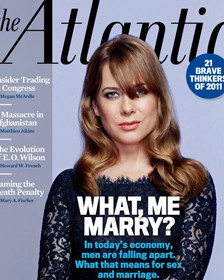
Kate Bolick created a bit of a buzz with her recent article “All the Single Ladies” published in Atlantic Magazine.  Through this long and data-filled narrative, Ms. Bolick argues the modern feminist case against traditional marriage and family roles and justification for the sexual “revolution.”  Ms. Bolick is a talented writer and thinker and interweaves her personal narrative through her polemic against traditional female roles.  In fact, the candor of her narrative keeps the reader turning the pages.  But through her candor, Ms. Bolick raises serious doubt about just how good this “modern” feminist ethics has been for women.

Ms. Bolick embodies the modern feminist lie life – pursuing self and professional fulfillment at the expense of marriage and family.  She is talented, successful, attractive.  She’s reached the top of the professional and social fields in New York City.  By any “modern” feminist standard, Ms. Bolick is accomplished.  She has more former boyfriends than she can recall.

But no love.  No family.  No children.  At no point does she attempt to persuade that her choices brought happiness or fulfillment. Doubt, not happiness, pervade her writing.

In reviewing this illuminating essay, Maggie Gallagher observes,

Who exactly are the new enemies of Eros?

Sex has been divorced from meaning. Men are not being raised to be good family men, and women are not being raised to appreciate good family men. And men are failing to become the kind of men women want. Porn is available for all as a substitute for life.

So Kate, facing a future without children or marriage, wants to celebrate singleness and to kill her youthful idealization.

“Everywhere I turn, I see couples upending existing norms and power structures,” she says, citing a friend who fell in love with her dog walker, a man 12 years younger, with whom she stayed for three years “and are best friends today.”

Well, everywhere I turn in Kate’s essay I see women doing the best they can to celebrate the best they feel they can get, and it’s unbearably sad.

The truth is celebrating singleness—i.e., celebrating “not doing something”—makes no sense. Loving is better than not loving. Choosing to love and commit to a husband or a child is a much higher ideal than choosing not to; that’s why it needs to be celebrated and idealized.

Of course, not everyone marries or becomes a mother, and of course every human life has other possibilities for meaning, and other forms of love to give.

But all of these other loves—the aunt, the grandparent, the best friend—came into being because somewhere some woman gave herself to the independence-shattering act of making a family.

See Maggie Gallagher The New Singleness

Mona Charen commented:

There is a great deal of interesting data in this piece. According to the Pew Research Center, 44 percent of Millennials and 43 percent of Gen Xers think marriage is becoming obsolete. As of 2010, women held 51.4 percent of all managerial and professional positions, compared with 26 percent in 1980. Women account for the lion’s share of bachelors and masters degrees, and make up a majority of the work force. Three quarters of the jobs lost during the recession were lost by men. “One recent study found a 40 percent increase in the number of men who are shorter than their wives.” Fully 50 percent of the adult population is single, compared with 33 percent in 1950.

The resulting decline of marriage has been a disaster for children, a deep disappointment to reluctantly single women and unhealthy for single men, who are less happy, shorter-lived and less wealthy than married men. The sexual revolution has left a trail of destruction in its wake, even when its victims don’t recognize the perpetrator.

See Charen, Blame the Sexual Revolution, Not Men

At about the same time Ms. Bolick was making headlines, there was another, shorter story in the news, a counter-narrative to Ms. Bolick.  This story was about traditional marriage.  It was not filled with data and in-depth analysis.  The story was about Norma and Gordon Yeager.  They were not nearly as attractive or successful as Ms. Bolick. They were from Marshalltown, Iowa.  In the eyes of the world, they were until recently entirely obscure.

Mr. Yeager had promised his wife he would never leave her.  In late October, the Yeagers were in a car accident.  Rushed to the hospital, they lay side by side in critical condition, holding hands.  Mr. Yeager died, still holding his wife’s hand, with their family around them.  Though dead, his monitor still indicated a beating heart. It was his wife’s heart picked up through their holding hands.  An hour later, she died, still holding his hand.  Mr. Yeager was 94; Mrs. Yeager was 90.  They had been married 72 years together.  The Yeager’s son said, “They just loved being together. He always said, ‘I can’t go until she does because I gotta stay here for her.’ And she would say the same thing.”

The Yeager’s testimony on marriage, love and family is compelling.  RIP

As more generations continue to eat the poisonous fruits of the “sexual revolution,” we can only hope and pray that the old becomes new again.

Categories
politics, economy, etc.

Why not Ron Paul?

“I mean, arguing over who mows Mitt Romney’s lawn … In the midst of a crisis, a sovereign debt worldwide crisis, the biggest in the history of the world, and the financial system of the world is about to collapse. We’re about to have another devaluation of … our credit rating. This is serious, and no control in the spending.  We’re going to have to get a hand on this.  We have to quit worrying over who’s mowing Mitt Romney’s yard.”  Ron Paul, Meet the Press, Oct. 23, 2011

“Mommy, turn the car.  We’re heading straight for a cliff.”

“Don’t worry, honey, we’re going to slow down some.”

The USA rapidly approaches an economic precipice and it’s much closer than we appreciate.   If so, the 2012 election is a referendum on national cliff diving.   The wreckage of great nations fill the history books, and rarely do last generations recognize the end before it’s too late.

We’re nearly 15 trillion dollars in debt, a number nearly beyond comprehension.  See debt clock here.  No nation in the history of mankind has accumulated such a deficit when compared to the worldwide purchasing power of the respective debt.  A few short years ago, our debt was nearly half of our GDP.  In 2011, at the time of this writing, our federal debt is approximately equivalent to our GDP.  See debt clock here.  Even the CBO acknowledges imminent crisis.  See here.  All levels of government spending presently consume nearly half our GDP.  See debt clock here.  We’re adding trillions of dollars of new debt every year.  How much is that?  If you counted a $1 bill every second, it would take you over 30,000 years to count the first trillion dollars. 

Newsweek’s Andrew Nagorski reports “America’s public debt could skyrocket from 44 percent of GDP before the 2008 financial crisis to 716 percent in 2080. If legislative reforms don’t expand the size of government, the CBO dials the projection back to 280 percent.”   As Mark Steyn observes in his recently published, must-read After America, that’s the difference between dead and more dead. Business Insider magazine reports that only 58 percent of Americans have a job right now; the median yearly wage in the United States is $26,261 and the average American household is carrying $75,600 in personal debt.  Including public and private debt, each American – man, woman and child – is each presently responsible for approximately $175,000 in debt.  And the figure grows. See debt clock here.  

The problem is systemic throughout the industrial nations and social-welfare states and no one is coming to our financial rescue.  Unfortunately, the US is the leader in this fiscal suicide. A leading German economist recently explained, “The alarmingly high national debt many countries now hold, as compared to gross domestic product, is by no means simply a result of fiscal countermeasures taken after the global financial crisis of 2008-2009. It is just as much a product of a policy, carried out for decades and widely accepted, of perpetually borrowing money for public budgets.”

We don’t need to slow down this economic death spiral, we need an abrupt turn-around.  Not a slight change of angle, but a U-turn.  Our current path is unsustainable.

A new tax plan alone is not good enough, even if it means giving Congress a new pipeline to take money from us in the form of a sales tax.  The problem is spending. The government of a free people should not be the largest employer, should not consume nearly half of the wealth of its people and should not burden yet unborn generations with trillions of dollars in debt.  King George III should not get the last laugh.

We used to pride ourselves in being the land of the free and the home of liberty.

Government, particularly the national government, should not be the central or primary organizing power of a free people.

Not only are we not governing ourselves as a free people, but we no longer think of America as a land of freedom.  Love of liberty no longer unifies us as a people.  Our original national motto E pluribus unum means little to many.

So … in light of what appears to me to be a substantial, imminent and self-induced fatal threat to our Republic, I don’t particularly care who mowed Mitt Romney’s yard or about archival copies of President Obama’s birth certificate.  Not surprisingly, Congressman Paul made the same points this past Sunday on Meet the Press.  (Hat tip to and video of  excellent responses to tough NBC interview available at The Corner here.)  I don’t think our primary solution is a better energy program spearheaded by the federal government.  Energy development and independence is important, but in the end, it’s another government project.  We need far less government and we need that U-turn immediately.

Only one presidential candidate has presented any policy proposals that address the scope and root of our impending financial disaster.  Dr. and Congressman Ron Paul’s “medicine” is strong and aggressive.  He promises a balanced budget within three years, ie before what would be his reelection.  It would not be easy or painless.  Ron Paul proposes:

SPENDING: Cuts $1 trillion in spending during the first year of RonPaul’s presidency, eliminating five cabinet departments (Energy, HUD, Commerce, Interior, and Education), abolishing the Transportation Security Administration and returning responsibility for security to private property owners, abolishing corporate subsidies, stopping foreign aid, ending foreign wars, and returning most other spending to 2006 levels. 

ENTITLEMENTS: Honors our promise to our seniors and veterans, while allowing young workers to opt out. Block grants Medicaid and other welfare programs to allow States the flexibility and ingenuity they need to solve their own unique problems without harming those currently relying on the programs.

CUTTING GOVERNMENT WASTE: Makes a 10% reduction in the federal workforce, slashes Congressional pay and perks, and curbs excessive federal travel. …

TAXES: Lowers the corporate tax rate to 15%, making America competitive in the global market. Allows American companies to repatriate capital without additional taxation, spurring trillions in new investment. Extends all Bush tax cuts. Abolishes the Death Tax. Ends taxes on personal savings …

REGULATION: Repeals ObamaCare, Dodd-Frank, and Sarbanes-Oxley. Mandates REINS-style requirements for thorough congressional review and authorization before implementing any new regulations issued by bureaucrats. President Paul will also cancel all onerous regulations previously issued by Executive Order.

MONETARY POLICY: Conducts a full audit of the Federal Reserve and implements competing currency legislation to strengthen the dollar and stabilize inflation.

Dr. Paul lists specifics, to include the numbers.  See here.  Recently, the Vision Forum gave Dr. Paul its highest grade in its analysis on how well the candidates’ proposed policies adhered to the US Constitution.  See here

Having delivered thousands of babies, Dr. Paul is also solidly pro-life.  See here and  here.    He is a strong advocate for homeschooling; his campaign states “no nation can remain free when the state has greater influence over the knowledge and values transmitted to children than the family does.”  See here and here.

Dr. Paul is not nearly as smooth or well-funded as Gov. Romney. Paul lacks Gov. Perry’s executive experience and made for the camera looks.  He has no trace of Mr. Cain’s bold rhetoric and infectious smile.  Dr. Paul has, however, diagnosed a terminal disease in this Republic and Dr. Paul is the only one promoting an adequate cure.  Further, he made and has spent his life’s energy publicizing this diagnoses.  Only now after the Bush-Obama fiscal conflagration do I appreciate the accuracy of what Ron Paul has been championing for years.

Categories
biz, legal, and professionalism Ministry politics, economy, etc.

STUMBLING DOWN THE CAMPAIGN TRAIL

I have been on a whirlwind adventure the past few weeks, hopping around the country from one event to another.  It all started in Orlando, when I was honored to present a workshop for folks attending the CareNet annual conference.  My topic was timely in this coming election year – how can nonprofit charities exercise their First Amendment rights in light of the tax code and IRS regulations that restrict their ability to speak in the political sphere?  CareNet people are passionately pro-life and would love to see pro-life candidates elected.

Charities can participate in lobbying to a limited extent but are absolutely prohibited from supporting or opposing a particular political candidate.
Charities can engage in “issue advocacy,” but need to be wary of traps—candidates talk about issues and plan their campaigns around issues.  Frankly, I believe the restrictions are unconstitutional, but people need to be informed and either follow them or be prepared to litigate a test case.

I decided to make it fun – and easy (or at least easier) – to navigate the rules.  We all wear different “hats” as we move into different roles in our personal and professional lives.  I bought some party hats and gave them names:  “Freddie Free Speech” (individual citizen), “Charlie, President of Choo Choo Charities” (official representative of charity), and “Cathy Candidate” (candidate for political office).  Once you identify your “hat” and know WHO you are when you speak, you can jump into a series of familiar questions:  WHO, WHAT, WHY, WHEN, WHERE, and HOW.

WHO:  Are you speaking as an individual citizen (“Freddie”) with First Amendment rights, or as the representative of a charitable nonprofit (“Charlie”)?  Do you want to invite a candidate (“Cathy”) to speak at your charity’s event, or simply introduce a candidate who happens to attend?

WHAT:  Are you talking about a particular candidate, proposed or pending legislation, or giving a moral exhortation?  Many issues overlap the religious/moral and political spheres in today’s world.

WHY:  Are you trying to support or oppose a candidate – or legislation you want to see passed (or not)?  Are you teaching a Bible study or giving a moral exhortation about an issue like abortion that is also a controversial political issue?

WHEN:  Is it close to the time for an election, or a legislative vote?

WHERE:  Are you at an official function for a charity you represent, or writing in an official publication for the charity?  If so, you can’t remove your “hat.”  Are you away from your charity, speaking solely as an individual and not on behalf of the charity?  If so, you can put on your “free speech” hat.

HOW:  How is the communication financed?  How is it presented—does it appear that the charity is biased in favor or against a particular candidate?  Has the charity provided an unbiased public forum for candidates—or perhaps given a candidate some advantage it doesn’t offer to others?

This is “food for thought,” as the IRS restrictions require some time to digest.  I hope to write a short guide that is reasonably easy to navigate—with a touch of fun.

Categories
theology

Fatherhood of God

Originally published at: https://truthonly.com/en/publications/18-fatherhood.html

Last year, I published an article on the uniqueness of Christianity to show that Christianity is fundamentally unlike any other world religion or philosophy. This new essay is bringing our discussion forward to a new unique and seldom explored area of Christian faith: the fatherhood of God. Human civilization, both in the East and the West, has been so profoundly moved and changed by Christianity that this idea hardly seems novel or radical today.

Of course, the idea that deity is like a father is not a Christian invention. The Old Testament has clear references to God as the Father (Jer 31:9 and Isa 63:16). And, almost every pagan religion designates a certain deity as the father or ascribes fatherly characteristics to it. The unique contibution of Christian faith is the new revlotuionary definition of divine Fatherhood.

Divine Fatherhood Is Not By Biological Descent

(1) First, Christianity (with Judaism) uniquely claims that divine Fatherhood is spiritual and not biological (John 1:12-13, cf. John 3). The pagans often described the creation of the world as a cosmic sexual or violent encounter between deities that somehow birthed them. This provided their nation with racist caste ideology, in which the people on top were considered demigods. Pharaoh claimed that he was the “son of Ra,” Greek and Roman warlords that they were “sons of Zeus” or Saturn or Mars, and the viking pillagers that they were “sons of Odin.” The claim to divine descent was their theological justification for abuse of power and mistreatment of others due to their obvious victories granted by the favoritism of gods. To pagans, the divine fatherhood was sexual, sensual, and literal. Their gods came to earth to have sex with women and procreate.

This is where, by the way, Mohammad completely misses the boat on understanding Jesus (Surah 4:171 and 5:116, cf. Surah 72:3), thinking that Christians claimed that Mary was God’s literal wife like pagans would teach. Contrast these verses from Quran with the words of apostle John: “But to all who have received him – those who believe in his name – he has given the right to become God’s children – children not born by human parents or by human desire or a husband’s decision, but by God.” We see clearly from this verse that divine Fatherhood is spiritual and not biological and that it is a result of new birth by faith (John 3). This idea is original, Christian and only Christian.

Divine Fatherhood Is Available To All Believers

(2) Second, Christianity uniquely claims that divine Fatherhood is universally available through Christ (Mat 6:9 and Luke 11:2). Joachim Jeremias contributed the most to the study of divine Fatherhood by devoting his best effort to uncover the significance of Christ’s calling God “Abba.” In his monstrous and detailed research, Jeremias uncovers that, despite numerous descriptions of deities as fathers, there are no extant records of believing communities addressing their deity as their “father” in worship. When Christ taught his disciples to pray “Our Father who art in Heaven, hallowed be Thy name,” he was turning the world upside down. Every Christian can address God as their Father!

The skeptics, of course, will claim that those words were later inventions inserted into the Bible. The burden of proof, however, still rests on them to explain how and why the early Church, being a jewish sect worshipping at the temple in Jerusalem, would so quickly and radically depart from traditional Judaism in this regard. There is no pagan syncretism in the Lord’s Prayer, which is associated with Christ before the writing of any of the books of the New Testament (Titus 3:4-7 is an early hymn) and present in the earliest liturgical texts before Constantine.

Divine Fatherhood Is The Cause Of Salvation

(3) Third, Christianity uniquely claims that divine Fatherhood is the direct cause of human salvation (Rom 8:15-17, cf. Titus 3:4-7, Gal 4:6-7). Jesus came to proclaim the coming of the Kingdom of Heaven to Earth. Jeremias argues that Christ’s addressing God as the Father is primarily connected with eschatological salvation in the context of the coming Kingdom. In plain English: Christian understanding of salvation, as it was preached by Christ, is based on the idea of inheritance. Christ preached that God the Father will establish his Kingdom on Earth, and His children will inherit it.

One of the earliest Christian writings is the book of Galatians, dating to about 45-60 A.D., reads: “But when the appropriate time had come, God sent out his Son, born of a woman, born under the law, to redeem those who were under the law, so that we may be adopted as sons with full rights. And because you are sons, God sent the Spirit of his Son into our hearts, who calls “Abba! Father!” So you are no longer a slave but a son, and if you are a son, then you are also an heir through God” (Gal 4:4-7). All those who believe in Christ will inherit the Kingdom of Heaven (cf. Rom 8:15-17). Inheritance is salvation attainable by faith and is universally available to everyone who believes in Christ. This idea is original, Christian and only Christian.

Conclusion

Those unique contributions to understanding of God are the result of Christ’s preaching. Before Jesus, no one knew God intimately as their Father. After Jesus, no one can claim that God is their Father unless they accept Jesus as the Son. True are the words of apostle John who said: “No one has ever seen God. The only one [Jesus], himself God, who is in closest fellowship with the Father, has made God [the Father] known [to us]” (John 1:18).

Categories
books

Already Compromised

“…what they don’t know is that, like the secular schools they wish to avoid, and like the majority of the great Christian institutions of higher learning of the past, many, many of the Christian schools they attend are…Already Compromised.”–Ken Ham

I recently finished reading Already Compromised by Ken Ham and Dr. Greg Hall.  Already Compromised is a follow-up title to Already Gone.  That first book disclosed poll research showing that a large percentage of children raised in conservative evangelical churches were leaving the faith and that most that leave had made up their mind to do so by high school.  The book also disclosed the surprise correlation showing that a child’s regular involvement with a Sunday school increased the risk.  See also here.  The implication was clear – we’re not doing a good job training and teaching our children.  The book was a call for churches to invest in teaching children and equip families to learn Biblical apologetics in an increasingly hostile and skeptical world.

Already Compromised takes the analysis one step further by examining the next phase of a young person’s life, college. The book analyzes a poll of 200 evangelical colleges.  The poll was again conducted by Britt Beemer of America’s Research Group.  They polled the leadership at universities and seminaries on core questions of faith and doctrine.  The leadership polled consisted of presidents, vice presidents, religion department chairs, and science department chairs.  As with Already Gone, the poll discloses some disappointing and surprising  results.

Perhaps not surprisingly, just because a college calls itself “Christian” does not mean that the school is committed to teaching all the fundamentals of the faith, particularly in the treatment of the Old Testament.  There was overwhelming support for the fundamentals of “New Testament” Christianity, ie virgin birth, Christ’s substitutionary atonement, a literal heaven and hell, the Second Coming, and the bodily Resurrection of Christ.  A large percentage of respondents however were not so committed to “Old Testament” truths, particularly in the areas of creation and the flood.  Accordingly, there was also meaningful weakness in many colleges regarding the inerrancy of scripture.

A high level take-away is to make sure you know what your colleges teach if you or your loved ones are attending an institution because they profess to be a place of Christian learning.  Beemer’s survey in Already Compromised does a good job of asking the right questions from several different perspectives to show that one has to really dig to understand what schools mean when they say they believe in the Bible.  A number of the questions show that some schools appear to engage in “newspeak.”  Buyer beware. 

One of the biggest surprises for me was in the research regarding human origins and the Book of Genesis.  One would assume that since evolutions is “Science,” as compared to the religion department, the science departments would harbor a greater percentage of skeptics regarding the creation account in Genesis and support for old earth/evolutionary theories.  Of course, one would be quite wrong.  In reviewing the survey data, Mr. Ham states, “It turns out that the science department is much more biblical in their beliefs than the religion department! … [O]nly 27 percent of people in the science department believe in nonliteral creation days.  Yet 55.6 percent of people in the religion department believe in nonliteral creation days.”  (emphasis in orig.) Schools that agree with AiG’s statement of faith are listed here.

Already Compromised is yet another call to the church to stand up, defend, and teach God’s word.  Greg Hall has an excellent chapter calling the church to apologetics arms. The books are a must read for those concerned with understanding the condition of the Church in the United States.

Categories
sports video

Kona Ironman 2011 – deja vu, but faster

Craig Alexander wins no. 3 and sets course record at 8:03:56.

The Queen of Kona Chrissie Wellington wins no. 4!

Categories
encouragement theology

Questions

Can I trust God for what he says?

What if it doesn’t make sense? What if God’s word goes against everything I understand? Can I still trust him?

What if God’s word makes me look foolish to others? Can I still trust him?


Am I close enough to God to hear him over the roar of life?

Do I hear him over the council of friends?

Do I hear him over my own prejudices? What if the answer is not what I want to hear?


Why do I read God’s word?

When was the last time I let it criticize me?

What did I change?

How long did the change last?

How has it helped me to serve others?

How has it helped me to serve God?

Categories
culture video

30 Minute Power Movie – Must See

Hitler.  Comfort.  Finish this sentence ….  Blue mohawk.  Holocaust.

Categories
humor sports

World Marathon Record Shattered

In case you missed it, the Marathon world record was broken or shattered last Sunday at the Berlin Marathon.  See here.  Patrick Makau ran to a new world record of 2:03:38.  That calculates to an average 4:43/mile pace!

You have to read the commentary on the record here!


Categories
Ministry World etc.

Prayers for Pastor Nadarkhani & the Barbarism of Iran

Iranian Pastor Youcef Nadarkhani, who is facing the death penalty, again refused to convert to Islam to save his life.

Nadarkhani was arrested in 2009 for the crime of apostasy because he allegedly abandoned Islam for Christianity. As a pastor, Iranian clerics believe that Nadarkhani was preaching in order to convert Muslims.

Before his last hearing Wednesday, Nadarkhani had been given three previous chances to repent, and all three times he has refused. After his final refusal Wednesday, no verdict has been announced, but many expect that he could be put to death as soon as Friday.

See Iranian Pastor Sentenced to Death: Nadarkhani Refuses to Convert

Senator Rubio’s (R, FL) statement today:

Iran’s rulers have spent over three decades terrorizing their neighbors, the entire world, and even their own people. Whether it was the violent crackdown following illegitimate elections in 2009 or the daily repression that has become routine, the Iranian people deserve America’s support.

I am deeply distressed by news accounts regarding Iranian Pastor Yousef Nadarkhani, who is facing imminent execution for apostasy (abandoning Islam) and failing to recant his Christian faith. Pastor Nadarkhani is 34 years old, has a wife and two young children, and is the pastor of an evangelical church in Iran.

Equally troubling are the facts that his wife was imprisoned to force him to recant, and his lawyer has been sentenced to prison and banned from practicing or teaching law. This is an unjust violation of the religious freedom that is a universal right of every human being.

According to international legal experts, the death penalty is not even codified in the Iranian Penal Code. Yet the Iranian courts claim that the writings of Islamic scholars and the “fatwas” of the Ayatollahs take precedence over the Iranian Constitution or law. Under Sharia law, the pastor can be executed after refusing three times to recant his Christian faith.

In recent years, there has been a very troubling increase in religious persecution in Iran. This is true for anti-Christian efforts, but it has also been evident in the repression of non-Shiite Muslims. While there has been some good documentation of this by a few in the media and in the human rights arena, there has unfortunately been a cowardly silence by the United Nations and most of the international community in this case and others.

Our own State Department should call for his immediate release. These are the moments when the government of this great nation must not be silent, and must be a voice for freedom for those who are defenseless.

In free and civilized societies, the freedom to practice one’s religion is a fundamental right. Once again, Iran’s government is proving to the world, and to the Iranian people, that it will spare no means to suppress their God-given right to freely express their ideas and worship.

As history has proven, countries that do not respect the rights of their citizens seldom respect the rights of their neighbors. The Iranian regime’s blatant disregard for its own citizens should raise alarms about its behavior in the region and the world should its illicit nuclear program be allowed to go on unchecked.

America’s commitment to the universal rights of man requires us to clearly speak out against their violations wherever they make occur. I urge the administration to relentlessly call for an immediate and unconditional release for Pastor Nadarkhani.

As if the West needed further evidence of the evil barbarity of the Republic of Iran or of the gross intolerance of Islamic regimes and their utter disregard for liberty (and for Christians, Jews, etc …)

Categories
encouragement theology

Stress overload?

How many times have you gotten into stress overload this week?

I found this reminder at the end of a very stressful week:

You keep him in perfect peace whose mind is stayed on you, because he trusts in you.

Trust in the LORD forever, for the LORD GOD is an everlasting rock.

Isaiah 26:3-4

The word “mind” used here could also be translated as our thoughts or intentions.  Likewise, the word “stayed” could be translated as leaned or rested.

Therefore, the encouragement here is that we need to rest our thoughts and our plans on God.  When we are sure that we are leaning on God with our plans, then we can have peace regardless of what happens with these plans.  It is now up to God and not up to us.

How much time do we spend talking with God about our plans?

Do we allow God to give us input?

Do we search out His Word for what he would want us to learn?

Do we trust God with the results?

If you are like me, this is very difficult to put into practice.  I often put put together my plans and then quickly go into action.  It is only after I failed that I realized that I never included God in my planning.

Thought for this week: Spend some time each day simply talking with God about your plans.  Be listening for Him to answer.

Categories
Poem

The Saviour of the World

In the Kingdom are the children;
You may read it in their eyes;
All the freedom of the Kingdom
In their careless humour lies.

Very winsome are the children,
Say, whence comes it, their sweet grace?
Small the pains they take for goodness,
Scarcely know they Duty’s face.

Frail and faulty little lieges,
Yet well-pleasing to their King:
Scanty thought they take to serve Him;
Yet the chosen Offering bring;

Ours, the weary long endeavour;
Theirs, the happy entering in:

Categories
homeschooling marriage and family

Homeschool Blindspots

This is an important article for all parents and is not specifically related to homeschooling.  I highlighted some of the important points below:

Having self-centered dreams:

It is only natural for parents to have high hopes and dreams for their children. However, when we begin to see our children as a reflection or validation of us, we become the center of our dreams, and the children become our source of significance. When that happens in our home it affects the way we relate with our children, and subtly breaks down relationship.

Raising the family as an idol:

When we allow the success of our family to determine our security or sense of wellbeing we are seeking from it something God intends us to receive from Him. I am describing idolatry.

Tending to judge:

When pride is working its work in us, we sincerely believe our personal opinions reflect God’s utmost priorities and standards.

Over-reliance upon sheltering:

Sheltering is a critical part of parenting, but if parents keep it their primary focus, the children will grow up ill equipped to handle the temptations in the world.A child isolated from disease may appear to be of the greatest health to his parents, but the health of the human body is only proven by how it withstands an attack. A weak constitution succumbs to every germ and virus – a strong one fights them off. Our spiritual and moral health is developed and proved in the same way.

Conclusion:

I am convinced that the most contagious parenting is living a heartfelt faith before your children. Fruitful interaction is not about what you do to your young people, but who you are with them. It’s about having a real faith in God, and expressing it in a real relationship with a real person–not about methods and self-working principles. God intends that the side-effect of loving Jesus and enjoying the grace of the gospel will be that all people–including our children–will be touched by the Savior in us.

I encourage you all to read the entire article here.

Categories
praise video

The One

Holy.  Omnipotent. Eternal.

Forever.  And always has been.  Can you imagine it?  No.  He never was not and always will be.

His knowledge has no limits.  I don’t know what that means, but do know that Scripture teaches He knew each of us by name before He laid the foundations of the Earth.  He knows each hair on our head and every one of the trillions and trillions of stars that He created.  Boundless in time and boundless in comprehension.

He is loyal and faithful, even to those that leave him.  Us.  He loved us before we loved him and after we betrayed his love.

But his love and justice are also limitless and eternal. Christ. Cross. Grace.

Amazing God.

He is mighty to save.

Categories
Uncategorized

THANK YOU, FOURTH CIRCUIT!

The Fourth Circuit has recently released an opinion affirming the right of churches (and other religious organizations) to abide by their religious convictions in making decisions about employees.  Federal law prohibits religious discrimination—a good thing when secular employers discriminate against people of faith—but churches could not achieve their spiritual mission if they could not “discriminate” by selecting employees who fully support that mission.

The case is Kennedy v. St. Joseph’s Ministries, Inc.  Lori Kennedy was employed as a geriatric nursing assistant at the Catholic nursing care facility operated by a religious order.  Residents and their families complained about Kennedy’s long skirts and head coverings—clothing she wore as a matter of religious principle.  Kennedy was told that her clothing was “inappropriate for a Catholic facility,” and she was discharged when she refused to change it.  In ruling for the church employer, the Fourth Circuit followed U.S. Supreme Court precedent affirming the right of a religious organization to “discriminate” on the basis of religion in its hiring decisions.

A case with similar issues will be heard in the U.S. Supreme Court on October 5, 2011.  Hosanna Tabor-Lutheran v. Perich.  (I wrote a brief for that case on behalf of Justice and Freedom Fund.)  Perich, a commissioned minister according to Lutheran tradition, taught at a church-owned school.  She sued after the church refused to immediately reinstate her during a time she was on disability leave.

Hosanna concerns the court-created “ministerial exception” that respects the right of a religious organization to select the persons who will carry out its religious mission.  The principle is particularly applicable to pastors, but it extends much further and is based on the First Amendment Free Exercise Clause.  Kennedy is about an exemption created by federal statute, and it covers all employees—not just “ministerial” employees.  Both cases are about protecting the right and ability of religious organizations to handle their internal business free of state interference.  The Religion Clauses of the First Amendment were designed to guard that right.

Categories
marriage and family politics, economy, etc.

North Carolinian’s to Vote on Gay Marriage – May 2012

RALEIGH–The North Carolina State Senate voted yesterday to concur with a bi-partisan vote in the North Carolina State House to pass a Marriage Protection Amendment recognizing marriage as the legal union of one man and one woman.  The Senate passed the Amendment 30-16, while the House vote was 75 to 42.  Passage of the Marriage Protection Amendment by both houses of the General Assembly allows the issue to go to a vote of the people on the next primary election ballot scheduled to be held May, 2012.

If a majority of North Carolina voters support the Marriage Amendment in this referendum, the language of the amendment will be permanently included in the North Carolina Constitution, and North Carolina will join thirty other states that have protected marriage in their constitutions.

“This is a great day for the people of North Carolinato be able to vote on this important issue,” said Tami Fitzgerald, Executive Director of the N.C. Values Coalition.  “The voters have waited for eight years to vote on protecting marriage, and the General Assembly has finally provided that opportunity to them.”

The floor debate in the Senate included discussion of the economic advantages the Marriage Amendment would bring toNorth Carolina.  States that have protected marriage have better business rankings than states that have not or states that have redefined marriage.  “Whether it’s Forbes magazine, the American Legislative Exchange Council, CNBC, Chief Executive Magazine or the National Chamber of Commerce, the overwhelming majority of the states in the top ten in economic performance in the country are states that protect marriage in their constitutions,” Fitzgerald said.

The Marriage Amendment will also protect private businesses by allowing them to continue to offer benefits according to their own strategic business decisions instead of government mandates.

The North Carolina Values Coalition has worked since February toward passage of the Marriage Protection Amendment and expects to play a key role in the campaign to get it passed on the next primary ballot.  Citizens interested in getting involved and supporting the NC Value Coalition’s efforts on behalf of marriage should go to NCValues.org

Categories
culture marriage and family

Choose Life from NC DMV

“Choose Life NC”

Now Available


Here is a quick and easy way to provide resources for women with an unplanned pregnancy: The application form for the “Choose Life” plate is available HERE for download.

 To apply for the “Choose Life” plate you must fill out the application form and return it along with the applicable fee ($25 for a regular DMV-issued “Choose Life” plate or $55 for a four-character personalized “Choose Life” plate) to the Carolina Pregnancy Care Fellowship (CPCF) at P.O. Box 3888, Charlotte, NC 28278.

 The DMV requires a third party-in this case the CPCF-to collect the initial 300 applications and fees. Once the CPCF submits all the applications to DMV, the plates will be made and sent to applicants. After the 300 threshold has been met, new applications for the “Choose Life” plate should be directed to the DMV directly.

 This specialty license plate will cost drivers that opt to purchase the plate an extra $25 per year for the DMV issued “Choose Life” plate or an extra $55 per year for a personalized “Choose Life” plate. This fee is in addition to the regular DMV vehicle registration fee. Of the additional $25, $15 goes to the CPCF, a nonprofit group that will distribute the funds to the state’s Pregnancy Resource Centers (PRCs). PRCs are non-profit, pro-life organizations located around the state that provide compassionate alternatives to abortion and help for women facing unplanned pregnancies, including counseling and other free-of-charge services.

Categories
Atheism, agnostic, evolution, etc.

Questioning Beginnings

Ann Coulter on the media’s handling of evolution and politics: THE FLASH MOB METHOD OF SCIENTIFIC INQUIRY

Dr. Albert Mohler reviews NPR’s recent developments concerning the dispute over human origins within the church: False Start? The Controversy Over Adam and Eve Heats Up

Dr. Georgia Purdom has started an interesting series: Does “Worldview-Neutral” Science Exist? Part One

Categories
Atheism, agnostic, evolution, etc. homeschooling

THE CHURCH-STATE PENDULUM SWINGS BOTH WAYS

Activists continue to use the worn-out phrase “separation of church and state” to eject religious expression from the public square.  But the Establishment Clause cuts both ways, prohibiting government hostility toward religion as well as the open endorsement that ruffles unbelieving feathers.

Advocates for Faith and Freedom is a fine Christian organization in Southern California that has been litigating Farnan v. Capistrano Unified School District.  (See http://www.faith-freedom.com.)  The plaintiff is Chad Farnan, a courageous Christian high school student who brought a case against his Advanced Placement European History teacher.  The teacher repeatedly ridiculed Chad’s faith: “When you put on your Jesus glasses, you can’t see the truth.”  A federal district judge issued a favorable ruling, finding an Establishment Clause violation when the teacher expressed “an unequivocal belief that creationism is ‘superstitious nonsense.'”  Unfortunately, the Ninth Circuit decided to skirt the constitutional issue.  The Court admitted that a teacher’s hostile comments about religion might cross the line, but granted immunity to the teacher because they could “not conclude that a reasonable teacher standing in [the teacher’s] shoes would have been on notice that his actions might be unconstitutional.”

Advocates for Faith and Freedom summed it up well:  “Just as public school teachers are not allowed to promote one religion in the classroom, they should not be able to use their classrooms as a platform to attack religion because the pendulum swings both ways.”  A.F.F. will seek further review in the Ninth Circuit, then petition the U.S. Supreme Court if that is unsuccessful.  Let’s pray that one of these courts gets it right.  The pendulum swings both ways—no endorsement, no hostility.